
Tree Removal & Storm Cleanup in Englewood
From hazardous oaks and storm-damaged pines to stump grinding and full debris haul-away - the heavy, dangerous tree work in Englewood, done safely and cleaned up right.
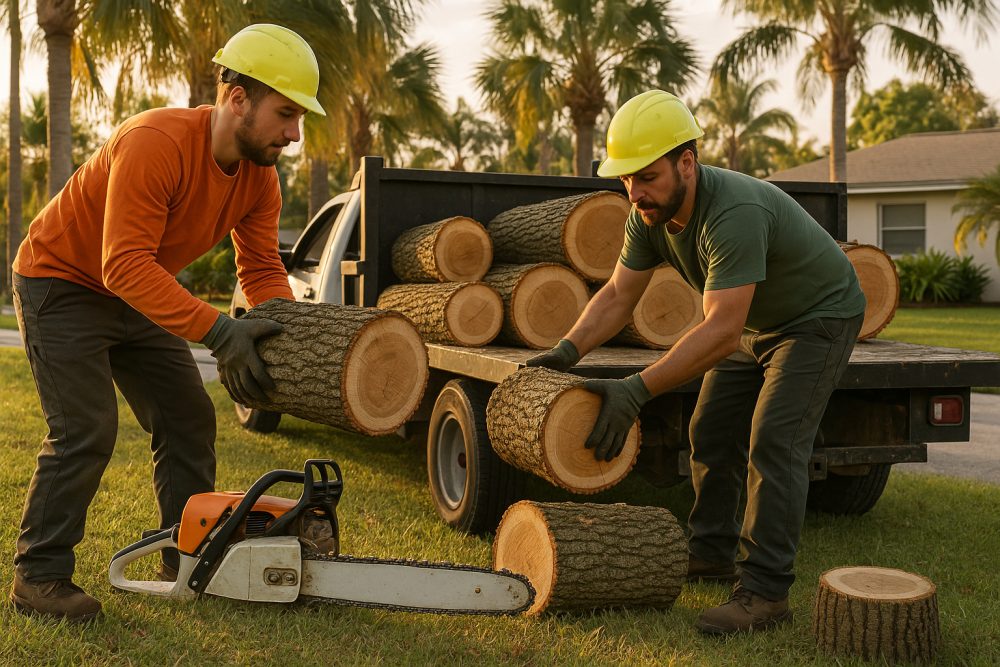
When a tree in Englewood has to come down - or a storm already brought one down for you - you want a crew that knows the area, carries real insurance, and shows up. We work Englewood and the rest of Sarasota County year-round, not just after a hurricane.
Local know-how for Englewood
Out on Manasota Key and around Englewood, barrier-island salt exposure and recent direct storm hits have left a lot of damaged slash pine and cabbage palm that needs to come down before the next season.
Our crew serves Englewood and the surrounding coastal communities with professional tree removal, emergency storm cleanup, stump grinding, and hazardous-limb work. We handle everything from single dead palms in a backyard canal lot to full post-hurricane debris clearing across multi-acre properties - permitted, insured, and staffed by technicians who know this stretch of southwest Florida well.
Englewood's Character and What It Means for Tree Work
Englewood sits at the southern edge of Sarasota County and the northern tip of Charlotte County, giving it a split personality that genuinely shapes how tree work gets done here. The community is older and largely residential, with a mix of longtime Florida families, retirees who've owned their homes for decades, and a growing number of buyers drawn by the proximity to Manasota Key and Lemon Bay. Lot sizes tend to be generous by Florida standards, and many properties carry a depth of mature tree canopy that newer subdivisions elsewhere simply haven't had time to grow. That maturity is a selling point for residents and a real variable for any crew doing removal or storm work.
The older sections of Englewood - particularly those developed from the 1960s through the 1980s - often feature large live oaks, sand pines, slash pines, and a dense mix of ornamental trees that have had fifty or more years to establish root systems. Those roots interact with aging septic systems, older slab foundations, and utility easements in ways that require careful planning before a single cut is made. Understanding the property before touching a chainsaw is not optional here - it is the difference between a clean job and a costly mistake.
Local Conditions That Drive Tree Service Demand
Englewood's coastal position on Lemon Bay makes it one of the more storm-exposed communities in the region. The barrier island geography funnels Gulf moisture onshore with regularity, and the area sits squarely in the path of late-season storms that track up from the southwest. Residents remember the impact of major hurricanes vividly - this is not a community that underestimates a forecast. After any named storm, the call volume for emergency cleanup and hazardous-tree assessment spikes sharply, and property owners who waited are often dealing with damage that compound day by day.
Salt air is a factor that many property owners don't account for until a tree starts declining. Canopy trees within a half mile of open water are subjected to salt spray that desiccates foliage, weakens branch attachments, and accelerates decay in wound cavities. Slash pines and Australian pines (a problematic invasive in this area) are particularly susceptible to root and trunk rot when combined with the salt-laden humidity that rolls off the bay. Add the sandy, poorly draining soils that dominate this part of the Gulf Coast, and you have conditions where a tree can look full and healthy from the street while harboring internal decay that makes it a serious hazard in any wind event above 50 miles per hour.
What Englewood Homeowners Call About Most
The most common calls we receive from Englewood are hazardous-tree assessments after a storm event, dead or declining pine removal, and canal-side or waterfront tree work where access requires careful rigging rather than heavy equipment. Many waterfront lots on Lemon Bay and its fingers have seawalls, docks, or shallow-drafted boats parked beneath or adjacent to mature trees, which means cranes and large bucket trucks are often impractical. Sectional rigging - taking a tree down in controlled pieces - is standard practice on these properties, and experience with that technique matters greatly.
We also get frequent calls about live oaks whose root systems are lifting driveways or threatening foundation slabs. In Englewood's older neighborhoods, these trees are often beloved by the homeowner but have simply outgrown the space. Rather than automatic removal, a proper assessment sometimes reveals that targeted crown reduction or root barrier installation preserves the tree and solves the structural conflict. When removal is the only sound answer, we approach it that way and explain clearly why - property owners here appreciate honesty over upselling.
Stump grinding is consistently requested alongside removal because Englewood's sandy soil makes it easy to grind deep, and leaving stumps invites carpenter ant colonies and fungal growth that can spread to nearby healthy trees. Post-storm debris hauling is another major category - after a significant weather event, yards in this community can accumulate volumes of broken limbs, uprooted palms, and scattered debris that a standard lawn crew is neither equipped nor insured to handle. You can read more about the full range of what we offer on our services page.
How the Work Is Done Well in Englewood
Permitting in Englewood spans two counties depending on the parcel, and that split jurisdiction is something a local crew navigates routinely while an out-of-area contractor may not. Sarasota County and Charlotte County each have their own canopy protection ordinances, and a significant number of live oaks above a certain trunk diameter require a permit before removal regardless of which side of the line your property falls on. We pull those permits, coordinate with the county, and handle the inspection process so the homeowner isn't left exposed to fines or stop-work orders.
Access on Englewood's narrower lots and older street grids sometimes prevents heavy equipment from reaching the work site at all. We work with a range of equipment from compact track loaders and mini-chippers up to larger aerial equipment for the right job, and our team includes climbers with substantial rigging experience for the jobs where ground-based machinery simply won't fit. Getting the equipment match right is one of the clearest signs of a professional operation versus a crew improvising on the fly.
For more detail on how we handle specific job types, our common questions page covers the questions we hear most from property owners in this part of Florida.
What to Expect from Start to Finish
The process starts with a site visit - a physical walk of the property, not a quote based on photos alone. Englewood properties vary too much in access, soil condition, and proximity to structures for a photo estimate to be reliable. After the assessment, we outline the scope clearly: which trees or limbs are being addressed, how the work will be staged, what happens to the debris, and what the stump plan is. We identify any utility lines that require coordination with the appropriate provider before work begins.
On the job day, the crew arrives with equipment matched to the site conditions discussed during the assessment. A straightforward removal on a clear lot may take only a few hours. A multi-tree job with rigging, stump grinding, and full debris removal from a waterfront property can run a full day or more. We do not leave a site with debris or an unground stump unless that was explicitly part of the original agreement - complete cleanup is part of the standard. After the work, a final walkthrough confirms nothing was missed and gives the homeowner a chance to flag anything before the crew leaves. If you're ready to get started, you can request a free consultation at any time.
Common Mistakes to Avoid
One of the most common mistakes we see in Englewood is homeowners hiring out-of-county crews that show up after a storm without verifiable insurance or permitting. After a major hurricane, this community sees an influx of transient contractors - people who do not carry the liability coverage appropriate for this work and who may leave before completing the job or before county inspection. Always request a certificate of insurance and verify contractor permitting through the state before any work begins.
Another frequent mistake is delaying removal of a storm-damaged or salt-declined pine. Property owners sometimes hope the tree will recover, but a pine with more than thirty percent crown loss after a storm or with visible resin bleeding from the trunk base is typically in irreversible decline. Each additional storm season it stands increases the probability of a catastrophic failure. Acting during the dry season, when crews have more availability and ground conditions are firmer, is almost always better than an emergency call in the middle of a weather event.
Topping trees - cutting the trunk or main scaffold branches at an arbitrary height - is still sometimes requested in Englewood by homeowners trying to reduce wind resistance before a storm. This practice causes severe structural damage to the tree, accelerates internal decay, and paradoxically produces dense, weakly attached regrowth that is more susceptible to wind damage than the original crown. Proper crown thinning and elevation by a certified tree specialist achieves genuine wind resistance without the long-term harm.
Why Englewood Residents Choose Local Professionals
This community has lived through enough storm seasons to have a realistic understanding of the risks that poorly managed trees present. Englewood homeowners are not easily impressed by sales talk - they value straightforward assessment, verifiable credentials, and a crew that knows the difference between a tree that needs to come down and one that needs thoughtful maintenance. Our roots here mean we know the soil, we know the storm patterns, we know the permit requirements on both sides of the county line, and we've worked on properties that look just like yours.
Local professionals also carry relationships with county offices, utility providers, and waste haulers that translate directly into faster turnaround on permitted jobs and better coordination after major weather events. That network matters when every crew in southwest Florida is suddenly in demand after the same storm. You can see the full list of communities we work in on our areas we serve page.
Nearby Areas and Sub-Neighborhoods
Englewood's work area extends naturally into several adjacent communities. The waterfront areas of Manasota Key, directly off Englewood Beach, present some of the most technically demanding tree work in the region - dense canopy on narrow barrier-island lots with both bay and Gulf exposure. Rotonda West, just across the Charlotte County line, shares many of Englewood's soil and storm-exposure characteristics and is well within our regular service area. The unincorporated pockets between Englewood and North Port to the east also see consistent demand, particularly for pine removal on larger rural parcels where trees have grown unchecked for many years. Wherever the property sits in this corridor, the approach is the same: assess carefully, plan thoroughly, and do the job right the first time.
Questions Englewood homeowners ask
Do I need a permit to remove a large live oak on my Englewood property?
In most cases, yes. Englewood properties fall under either Sarasota County or Charlotte County jurisdiction depending on the parcel, and both counties protect mature live oaks above a certain trunk diameter. Removal without the appropriate permit can result in fines and required mitigation planting. We handle the permit application and county coordination as part of the job, so you don't need to navigate that process yourself.
My waterfront lot on Lemon Bay has a seawall and a dock right under a large pine. Can that tree still be removed safely?
Yes, but it requires sectional rigging rather than felling. Our climbers take the tree down in controlled pieces, directing each section away from the water, the seawall, and the dock. This technique is standard practice on Englewood's canal and bay-front lots where heavy equipment either can't reach or would cause more damage than the tree itself. A site visit lets us plan the rigging approach before any work begins.
How quickly can you respond after a storm hits Englewood?
Emergency response timing depends on storm severity across the region. After a major hurricane, every crew in southwest Florida is in simultaneous demand. We prioritize calls where a tree is actively threatening a structure or blocking egress. If your situation is urgent, contacting us immediately after the storm passes gets you in the queue early. For non-emergency post-storm cleanup, we schedule systematically through the affected area.
My slash pine looks healthy from the street but a neighbor says the roots might be rotting. How can I tell?
Salt air exposure and Englewood's sandy, poorly draining soils create conditions where slash pines can develop significant root and butt rot while the upper crown still looks full. Signs include resin bleeding at the base, fungal conks at the root flare, soft or discolored bark near the soil line, and any lean that has developed recently. A physical assessment - not a photo review - is the only reliable way to evaluate what's actually happening at the base.
After the tree is removed, do you grind the stump, and why does it matter in Englewood specifically?
Stump grinding is strongly recommended on Englewood properties. The sandy soil here makes grinding efficient and allows us to go deep, but leaving a stump behind invites carpenter ant colonies and fungal growth that can spread through the root system to adjacent healthy trees. On smaller lots common in older Englewood neighborhoods, that spread can affect trees within a few feet of the stump. We grind all stumps to below grade and rake out the chips.
Can I just have a storm-damaged tree topped to reduce the wind risk before next hurricane season?
Topping is not a solution we recommend, and we won't perform it. Cutting a tree at an arbitrary height creates large open wounds that invite decay, and the dense regrowth that follows is structurally weak and actually more vulnerable to wind damage than a properly maintained crown. For Englewood properties where wind exposure is a real concern, the right approach is crown thinning and elevation performed by a qualified tree specialist - this genuinely reduces wind load without harming the tree's long-term structure.
Reviews from Englewood & nearby
Mike and crew did an absolutely fantastic job on my project to remove lots of trees and stump grind and clean out an area of thick weeds. Very friendly, easy to talk to and very reasonable. I would highly recommend them to anybody who needs any type of yard work. Great job guys.
Mike and Rio did an outstanding job today. They removed three trees, ground six stumps and hauled away all the debris. These men are focused on safety and precision. I will be calling them again in the future for future tree removal and trimming of my palm trees. I highly recommend them.
Wonderful service! I started out just wanting to do two trees and trying to do some of the landscaping work myself, but after I had them get started, I realized how competent they are.
Got a tree in Englewood?
Tell us what you're looking at and we'll come take a look - free, with a firm written price and a straight recommendation.