
Tree Removal & Storm Cleanup in Laurel
From hazardous oaks and storm-damaged pines to stump grinding and full debris haul-away - the heavy, dangerous tree work in Laurel, done safely and cleaned up right.
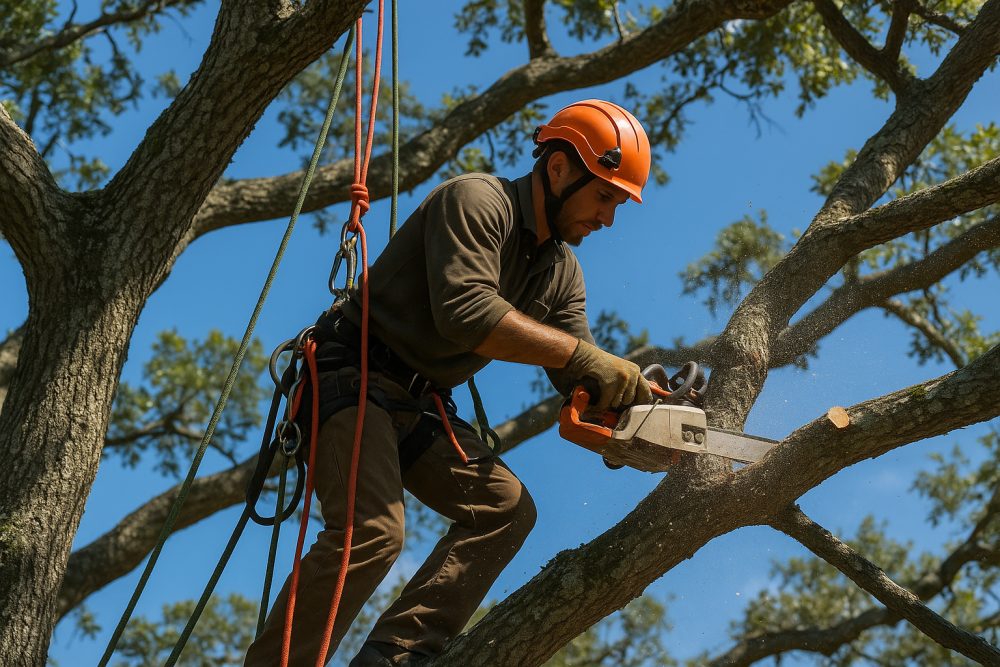
When a tree in Laurel has to come down - or a storm already brought one down for you - you want a crew that knows the area, carries real insurance, and shows up. We work Laurel and the rest of Sarasota County year-round, not just after a hurricane.
Local know-how for Laurel
This quiet pocket between Osprey and Venice still has old oaks and rural lots - a mix of heritage-tree care and straightforward removals.
Our team provides professional tree removal and storm cleanup services throughout Laurel, Florida, covering everything from hazardous tree takedowns and stump grinding to full debris removal after a tropical storm. We serve residential and rural properties alike, working safely around the overhead utilities, older oaks, and tight lot lines that define this quiet Sarasota County community.
Laurel: A Community Shaped by Mature Trees and Rural Edges
Laurel sits in an older, unincorporated stretch of Sarasota County between the Venice and Osprey corridors, close enough to Little Sarasota Bay to feel the salt-laced Gulf air but far enough inland that many properties retain a genuinely rural character. The area is a patchwork of modest single-family homes on generous lots, some dating back several decades, and scattered acreage parcels that back up to scrub, wetland edges, or drainage corridors. That mix of dense residential blocks and semi-rural properties gives tree work here a distinct flavor compared to tightly platted suburban subdivisions farther north. You will find old Florida oaks with canopies wide enough to shade two lots, mature slash pines that have been growing since the neighborhood was first cleared, and the occasional wild-growing Chinaberry or laurel oak that has taken hold along a fence line without anyone planting it.
Why Local Conditions Drive Constant Demand
Sarasota County as a whole sits squarely in Florida's subtropical storm belt, and Laurel's position along the lower county means it receives the same punishing combination of heat, humidity, and seasonal hurricane risk that defines life on the Gulf Coast. The Atlantic hurricane season runs from June through November, but the most damaging winds for Laurel properties historically arrive in the August through October window when Gulf storms intensify quickly before making landfall or grazing the coast. Humidity stays high year-round, and that persistent moisture accelerates the decay of tree tissue in ways that are invisible from the ground until a limb fails. Salt air drifting off Little Sarasota Bay is a genuine factor on properties closer to the water, steadily stressing bark and weakening the vascular tissue of trees that were never bred for coastal exposure.
The housing stock adds another layer. Many homes in Laurel were built in the 1960s, 1970s, and 1980s, meaning the trees planted around them have had forty to sixty years to grow into the power lines, close against roof overhangs, and push root systems under driveways and sewer laterals. That age of landscape is one of the most consistent drivers of emergency calls - trees that looked perfectly healthy two years ago reveal internal rot only after a storm makes them fail.
The Jobs Laurel Customers Actually Call About
The most common call is a storm-damaged tree: a large oak or pine that has either fallen entirely or split at a major crotch union and left a half-ton section hanging over a roof, a fence, or a parked vehicle. Emergency storm work is by nature unpredictable, and the combination of large canopies and close house spacing in Laurel means a falling tree rarely lands cleanly in an open yard. More often it catches a soffit, takes out a fence panel, or drapes itself across a utility drop, which immediately introduces coordination with the utility company before any cutting can begin.
Beyond emergencies, removal of dead or declining pines is a steady part of the workload here. Slash pine is the dominant pine species in this part of Florida, and while it is resilient, it is highly susceptible to pine bark beetles once it becomes stressed by drought or root damage. A dead pine standing over a home in Laurel is not an abstract risk - a large specimen can reach sixty or seventy feet and carry enough weight to do structural damage when it falls. Proactive removal before the next storm is consistently the smarter and less expensive path.
Stump grinding follows almost every removal job. Laurel's sandier soils mean stumps left in place tend to host termite activity sooner than properties in heavier clay soils farther north, and ground-level stumps hidden by turf become a hazard to lawnmowers and ankles. Many homeowners also call specifically about roots that have migrated under concrete pads, driveways, or the slab edges of older homes - a job that requires both grinding and sometimes directional root pruning to relieve pressure without destabilizing the remaining tree.
Storm debris cleanup after a named storm is its own category of work. Laurel properties with mature tree cover can accumulate enormous volumes of broken limbs, stripped bark, and uprooted understory after a significant hurricane. Getting that material cut, stacked, and hauled away quickly matters both for safety and to comply with county timelines for debris pickup programs. See our full list of our services to understand exactly what each type of job involves.
How the Work Is Done Well in Laurel
Access is a genuine consideration in this community. Many older Laurel lots have a single-car concrete drive, mature vegetation running right to the property line, and limited side-yard clearance. A large crane or wide-body chipper truck simply cannot always reach the work, which means more hand-climbing, rigging, and piece-by-piece lowering than you would see on a newer, wider suburban lot. Crews experienced in Laurel understand that most jobs require ground rigging setups that protect the existing lawn, garden beds, and adjacent fencing.
Sarasota County requires permits for certain tree removals, particularly for specimen-sized trees that meet size thresholds under the county's land development regulations. Grand oaks and large canopy trees on residential parcels in unincorporated Sarasota County can trigger a permit requirement even for private property owners. The permit process involves documentation of the tree's condition and, in some cases, a mitigation replanting requirement. Working with a contractor who understands the county's specific thresholds and can prepare the documentation correctly saves homeowners from after-the-fact citations and fines.
What the Process Looks Like, Start to Finish
For most jobs in Laurel, the process begins with an on-site assessment - a visit to the actual tree on the actual property where a trained eye can identify structural defects, assess crown weight distribution, identify underground utility conflicts, and give an honest recommendation. A phone call or a photo is rarely enough for a large or complex tree. That assessment shapes the proposal, the equipment selection, and whether a permit application needs to be filed before any work starts.
Once work is scheduled, the crew arrives with the right equipment for that specific lot, whether that means a compact loader for a tight side yard or a larger crane setup for a tall pine over a structure. After cutting is complete, debris goes through the chipper on site, logs are either hauled away or cut to firewood length at the customer's request, and the stump grinding crew finishes the job so the area is ready for sod or fill. A good cleanup is part of the job, not an optional add-on. If you have questions about what the process involves for your specific situation, our common questions page covers many of the scenarios Laurel homeowners ask about most.
Mistakes to Watch for and How to Avoid Them
The single most avoidable mistake Laurel homeowners make is waiting. A tree with visible crown dieback, carpenter ant activity at the base, or a pronounced lean toward a structure is giving clear signals. Waiting for the next named storm to confirm the diagnosis almost always results in a more expensive, more dangerous, and more complicated job. Emergency storm calls cost more in every dimension - the urgency premium, the liability complexity, and the additional utility coordination all add up.
A second common mistake is hiring based on price alone after a storm, when uninsured operators often flood the area. Florida requires tree service contractors to carry specific insurance coverage, and Sarasota County has its own permitting requirements. An uninsured crew working on your Laurel property leaves you personally liable for any injuries or property damage that occur during the job. Checking permitting and insurance before signing anything is not paranoia - it is basic protection for a significant financial exposure. Our free consultation is always a good first step before committing to any contractor.
Why Laurel Residents Rely on Local Professionals
Tree work in Laurel is not a DIY category for most homeowners, and that is not an opinion - it is a function of the trees themselves. A large live oak or a tall slash pine requires rigging knowledge, chainsaw technique under tension, and awareness of how a multi-ton piece of wood will move when it is cut. Falling hazard, electrical contact, and roof damage are all real outcomes when that work is done incorrectly. The same goes for post-storm cleanup, where broken wood under tension can release unpredictably. Local professionals who work Laurel regularly also understand the county permit process, know where the utility corridors typically run on older lots, and can manage the job without destroying the rest of the landscape in the process. For Laurel homeowners who want to understand which areas we cover nearby, our areas we serve page lays out the full service territory.
Nearby Areas and Sub-Neighborhoods
Laurel sits within a cluster of communities that share similar tree profiles and storm exposure. Properties closer to the Intracoastal corridor have more intensive salt air stress and a higher proportion of palm species alongside the native oaks and pines. Neighborhoods that shade into the Osprey corridor to the north tend to feature larger, older lots with even more established canopy. Homes along the edge of the county's conservation and wetland areas often have protected tree classifications that require specific handling. Whether your property sits on a standard residential lot or borders one of the area's natural corridors, the same principles apply: assess early, permit correctly, hire properly insured professionals, and plan proactively rather than reactively.
Questions Laurel homeowners ask
Do I need a permit to remove a large oak tree on my Laurel property?
Unincorporated Sarasota County does have size thresholds that trigger permit requirements for certain canopy trees, including live oaks above a specified trunk diameter. Laurel falls under county jurisdiction, not a city code, so the county's land development regulations apply. We handle the permit documentation for you as part of the job, including any required mitigation replanting. Removing a qualifying tree without a permit can result in fines and a mandatory replacement requirement.
A pine tree on my Laurel lot looks dead - how urgent is it to remove it?
Dead pines in Laurel are a genuine structural risk and should be treated as urgent, not a project to defer until the next dry season. Slash pine, the dominant species here, can reach sixty or more feet and carries substantial crown weight even after it dies. Florida's hurricane season creates a hard deadline - a standing dead pine over a home or fence before August is a liability. We recommend scheduling removal as soon as dieback becomes apparent, rather than waiting for confirmation after a storm.
My Laurel property has a narrow side yard - can you still remove a tree close to the house?
Tight access is one of the most common job conditions on older Laurel lots, and our crews are set up for it. When a wide-body chipper or large crane cannot reach the work zone, we use hand-climbing, aerial lift equipment scaled for the space, and ground rigging systems that lower pieces in a controlled sequence. We assess access during the initial site visit so the right equipment shows up on the first day - not after a larger truck has already torn up the lawn.
How quickly can you respond after a hurricane hits the Laurel area?
Storm response in Laurel follows a priority system based on active hazards - a tree on a roof or blocking emergency access comes before debris pile cleanups on otherwise clear properties. We stage equipment locally before named storms when conditions allow. After a major event, realistic wait times depend on the volume of damage across the county, but we communicate clearly about scheduling rather than making promises we cannot keep. Calling early after a storm gets you on the schedule sooner.
Can stump grinding damage the slab or foundation of my older Laurel home?
On older Laurel properties where large oaks or pines have been growing for decades, root systems can reach close to or under slab edges. We assess root proximity during the site visit and adjust grinding depth and direction accordingly. Standard stump grinding removes the stump to well below grade without disturbing the surrounding soil profile significantly. For stumps very close to a foundation, we may recommend a shallower grind combined with chemical treatment rather than aggressive mechanical grinding.
Should I be concerned about salt air affecting trees on my Laurel property near Little Sarasota Bay?
Yes, salt air stress is a real factor for properties in the lower Laurel area near the water. Salt deposits on bark and foliage interfere with normal transpiration and can weaken a tree's ability to resist secondary stressors like drought or fungal infection. Trees showing marginal or unexplained dieback on coastal-facing sides of the canopy are often experiencing salt stress. We factor this into removal recommendations and can advise on which replacement species handle coastal exposure in this part of Sarasota County better than others.
Reviews from Laurel & nearby
Mike and crew did an absolutely fantastic job on my project to remove lots of trees and stump grind and clean out an area of thick weeds. Very friendly, easy to talk to and very reasonable. I would highly recommend them to anybody who needs any type of yard work. Great job guys.
Mike and Rio did an outstanding job today. They removed three trees, ground six stumps and hauled away all the debris. These men are focused on safety and precision. I will be calling them again in the future for future tree removal and trimming of my palm trees. I highly recommend them.
Wonderful service! I started out just wanting to do two trees and trying to do some of the landscaping work myself, but after I had them get started, I realized how competent they are.
Got a tree in Laurel?
Tell us what you're looking at and we'll come take a look - free, with a firm written price and a straight recommendation.