
Tree Removal & Storm Cleanup in Siesta Key
From hazardous oaks and storm-damaged pines to stump grinding and full debris haul-away - the heavy, dangerous tree work in Siesta Key, done safely and cleaned up right.
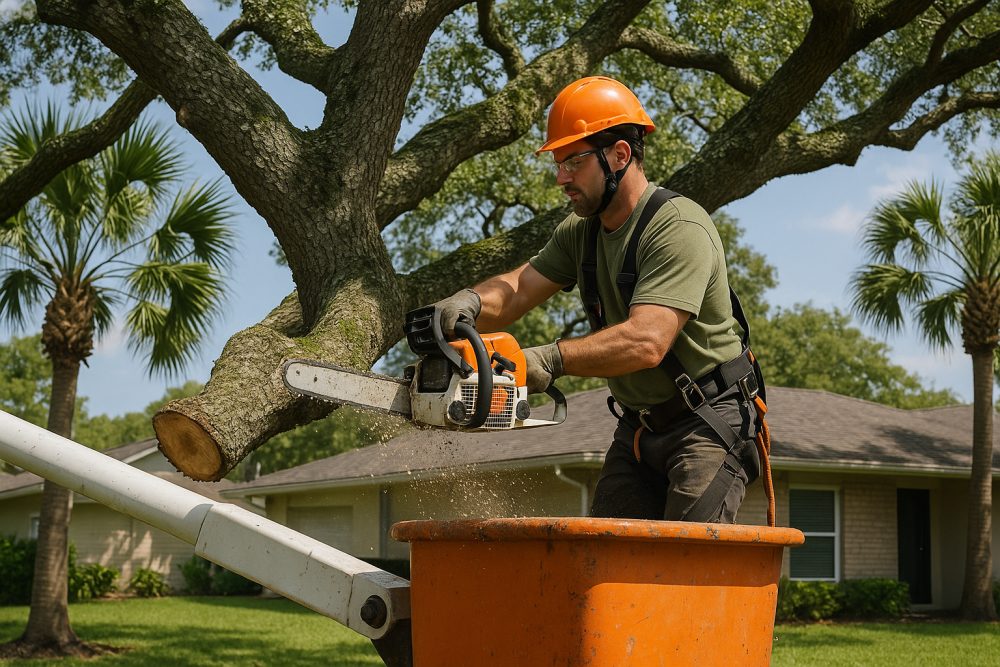
When a tree in Siesta Key has to come down - or a storm already brought one down for you - you want a crew that knows the area, carries real insurance, and shows up. We work Siesta Key and the rest of Sarasota County year-round, not just after a hurricane.
Local know-how for Siesta Key
Salt-stunted oaks, lots of palms, tight lots, and a surge zone - Siesta Key is all about careful work on small sites with strict key rules, not brute force.
Professional tree removal and storm cleanup on Siesta Key is provided by local tree crews and crews who understand the island's coastal conditions, tight lot lines, and high-value properties. Services cover full tree removal, emergency storm response, debris hauling, stump grinding, and dead or hazardous limb work - from small residential lots near the village to larger canal-front estates throughout the key.
Siesta Key: A Barrier Island Where Trees and Storms Meet
Siesta Key is a narrow barrier island off the coast of Sarasota, separated from the mainland by the Intracoastal Waterway and connected by two drawbridges. The island is almost entirely residential - a mix of old-Florida cottages, mid-century ranch homes, and modern luxury construction that replaced smaller structures over the decades. Because land on Siesta Key is finite and densely settled, every tree on every lot matters in a way that it simply does not on a sprawling inland parcel. There is nowhere for a falling tree to land that does not threaten a structure, a neighbor's fence, a seawall, or a vehicle.
The canopy on the key is a patchwork of mature tropical and subtropical species - live oaks, sabal palms, gumbo limbo trees, ficus, sea grapes, and a number of ornamental species planted by successive generations of homeowners. Some of these trees are genuinely old, their root systems lifting pavers and threatening pool decks and driveways. Others were planted without enough thought about their eventual size relative to the lot, and they now compete with overhead utility lines, roof overhangs, and neighboring trees. Understanding which species is which - and how each one responds to pruning, storm stress, or salt air - is a meaningful part of this work on the key.
Coastal Conditions That Drive Tree Work on Siesta Key
Salt air is arguably the single greatest environmental pressure on trees here. Every tree within a few hundred feet of the Gulf or any tidal water channel is in a constant battle against salt spray and salt-laden air. Salt draws moisture from leaf tissue, causes dieback on branch tips, and over time weakens a tree's structural integrity in ways that are not always visible until a storm exposes the rot. A tree that looks full and green in April may shed major limbs in July the moment a tropical system pushes wind gusts across the key.
High humidity compounds this. Siesta Key averages high moisture levels year-round, which accelerates fungal growth in tree wounds and speeds the decay of structural wood inside older specimens. Homeowners often discover, only after a insured tree specialist removes a tree, that the interior was far more compromised than the exterior suggested. That is exactly why storm damage assessments here go beyond what is visible, particularly for oaks and ficus trees whose canopies can hide internal hollow sections.
Hurricane season runs June through November, and for a barrier island with limited evacuation routes and a concentrated population, preparedness is taken seriously. A tree that might be tolerated on an inland lot is a genuine liability here. When a named storm approaches, there is rarely time to schedule last-minute tree removal - the bridges close, and crews cannot safely work in the preparatory window just before landfall. Property owners who address hazardous trees before the season begins are the ones who avoid emergency calls at the worst possible moment. Our free consultation is a practical first step before June arrives.
What Siesta Key Customers Typically Call About
The most common call on the key is storm damage - either a tree or large limb that has come down on a roof, pool cage, dock, or car, or a tree leaning at a dangerous angle after a storm. Because the island's homes are closely spaced, a single downed tree frequently affects multiple properties, raising questions about liability, access, and coordination with neighbors.
The second major category is preventive removal before storm season. Many long-term residents have learned that a full-canopied ficus or a top-heavy queen palm near the house is not worth the risk. These calls tend to come in April and May, which is also when the permitting process needs to be started to ensure work is completed well before summer. Sarasota County has a tree protection ordinance, and many removals on the key require a permit - something that catches first-time owners off guard.
Dead palm removal is a consistent volume of work. The key has a large number of queen palms and Washington palms that succumb to lethal bronzing, nutrient deficiency, or wind damage. Dead palms in the 30- to 50-foot height range need proper rigging to bring them down safely, especially over pool cages and screen enclosures that are so common on island properties. Stump grinding follows most removals, since the shallow sandy soil and close spacing of irrigation systems and utility lines require care in the grinding process.
Canal-front and Gulf-front properties also generate calls related to tree roots undermining seawalls or root intrusion into dock structures. These are not always simple removals - the work needs to be staged carefully to protect the seawall cap and surrounding hardscape while still achieving a clean result. For a full picture of what these jobs involve, the services page breaks down each type of work in more detail.
How the Work Is Done Well on Siesta Key
Access is one of the defining challenges of tree work on this island. Many properties are accessible only from a single narrow driveway, and the older sections of the key have limited street width. Larger crane equipment that might be used on a roomy mainland lot is sometimes impractical here. Skilled crews adapt by using climbing tree crews and friction-rigged lowering systems to break down large trees piece by piece rather than rely on a crane's reach. This takes more time and precision, but it protects the property and the neighbor's property.
The permitting question deserves direct attention. Sarasota County's tree removal ordinance requires a permit for the removal of trees above a certain diameter, including many of the live oaks and large shade trees common on the key. The permit process includes documentation of the tree's condition and, in some cases, a mitigation requirement - meaning a replacement tree must be planted. A legitimate tree service operating on Siesta Key will pull the appropriate permits before work begins, not after. If a contractor offers to skip the permit to save time or money, that is a clear warning sign. You can find answers to common permitting questions on our common questions page.
What the Process Looks Like Start to Finish
A typical job on Siesta Key begins with an on-site assessment. the crew leader evaluates the tree or trees in question, identifies any immediate hazards, and discusses the property owner's goals - whether that is full removal, selective pruning to reduce wind resistance, or just removal of dead wood. After the assessment, a written proposal is provided.
If a permit is required, the application is submitted to Sarasota County before any work is scheduled. Once the permit is in hand, the crew arrives with the equipment and approach suited to the specific property - whether that is a bucket truck accessing from the street, a climbing crew working entirely from within the canopy, or a combination of both. Wood is typically sectioned and chipped on-site, with larger logs either removed or offered to the homeowner as firewood. Debris is hauled, and the site is blown clean. Stump grinding, if requested, is usually completed the same day. The homeowner should expect the site to be clean and clear before the crew leaves.
Common Mistakes to Avoid
One of the most frequent mistakes Siesta Key homeowners make is waiting until after a storm to address a tree they already knew was a problem. By then, the tree may be on the pool cage, removal becomes an emergency service, and the timeline and cost are no longer manageable. A tree that shows dead wood, leans toward the house, or has a trunk wound should be evaluated before the season starts, not during it.
Another mistake is hiring a crew without verifying they carry liability insurance and workers' compensation coverage. Tree work on tight island lots, over pools and screen enclosures, is genuinely hazardous. If an uninsured worker is injured on your property, you may face a liability claim. Ask for certificates before signing anything. The areas we serve page can also help you confirm that a crew is genuinely familiar with coastal island work rather than primarily a mainland operation.
Topping trees - cutting the main leader or removing large portions of the canopy to reduce height - is another common error. It weakens the tree's structure, promotes the growth of dense, weakly attached regrowth, and actually increases storm hazard over time. Proper structural pruning achieves wind resistance without the damage that topping causes.
Why Siesta Key Residents Choose a Local Professional
The combination of high property values, coastal exposure, strict county regulations, and the physical constraints of barrier island lots makes professional tree work not just preferable but genuinely necessary on Siesta Key. A mistake here - a tree dropped on a seawall, a permit violation, an uninsured crew with no insurance - costs far more than the job itself. Local professionals with specific experience on the key understand the species, the access challenges, the county permit process, and the seasonal urgency that shapes every project.
Residents who have owned property here through multiple storm seasons recognize the value of an established relationship with a trusted crew. When a storm passes at 2 a.m. and a tree is on the roof by sunrise, a phone call to someone who knows your property and your neighborhood is worth more than any search result. For new owners or anyone who has not had their trees assessed recently, scheduling a free consultation before storm season is simply good stewardship of a property that, on Siesta Key, represents a significant investment.
Surrounding Areas and the Broader South Sarasota Region
Siesta Key sits within reach of several other communities that face similar coastal tree challenges. The mainland neighborhoods of Gulf Gate, South Sarasota, and the areas surrounding Phillippi Creek all see overlapping conditions - older canopy trees, humid salt-air influence, and storm-season urgency. Within the key itself, the quieter residential streets south of the village, the large estate properties near the southern tip, and the denser cottage neighborhoods near the public beach all present slightly different access and vegetation profiles. Crews who know the key know these distinctions. For property owners throughout the broader region, the areas we serve index lists every community where full service is available.
Questions Siesta Key homeowners ask
Do I need a permit to remove a tree on my Siesta Key property?
Most likely, yes. Sarasota County's tree protection ordinance requires a permit for removing trees above a certain trunk diameter, which includes many of the live oaks and large shade trees common on the key. Some removals also trigger a mitigation requirement - meaning a replacement tree must be planted. A local tree service will handle the permit application for you before any work begins.
A storm knocked a tree onto my pool cage last night. What should I do first?
Call a local tree service for emergency response as soon as it is safe to do so. Do not attempt to remove the tree yourself - a tree resting on a pool cage or screen enclosure may be under tension, and shifting it incorrectly can cause additional structural damage. Document the damage with photos for your insurance claim before any debris is moved. A reputable crew will stabilize the situation and provide a full removal.
My queen palm looks dead. Is removal complicated on a canal-front lot?
Dead palm removal on canal-front Siesta Key properties requires careful rigging because the palm must be sectioned and lowered without dropping weight onto the dock, seawall cap, or neighboring structures. A climbing tree specialist using a controlled lowering system is typically the right approach. The sandy soil near canal edges can also be softer than it appears, so ground equipment placement needs to account for that.
When is the best time of year to schedule tree removal on Siesta Key?
Late winter through early spring - roughly February through April - is the ideal window. Hurricane season begins in June, and Sarasota County permits can take a few weeks to process. Scheduling early in the year gives you time to have hazardous trees assessed, permitted, and removed before the summer storm season begins. Waiting until May or later risks running out of time before conditions become dangerous.
How do I know if my large ficus or oak is actually a storm risk on my island lot?
The signs to look for include dead wood in the upper canopy, cracks or cavities in the trunk, fungal growth at the base, roots lifting hardscape near the foundation, and any lean toward the house or a neighbor's structure. Because salt air and humidity can cause internal decay that is not visible from the ground, a professional assessment - not just a visual check from the yard - is the only reliable way to evaluate structural integrity.
Can a large crane get onto my Siesta Key property for a tree removal?
Not always. Many lots on Siesta Key have narrow driveways, low overhead lines, or soft ground near the water that limits heavy equipment access. In those situations, experienced crews use climbing tree crews and rigged lowering systems to break the tree down piece by piece from within the canopy. This method is slower but equally safe and causes far less disturbance to landscaping, irrigation, and hardscape than dragging equipment across a tight island lot.
Reviews from Siesta Key & nearby
Mike and crew did an absolutely fantastic job on my project to remove lots of trees and stump grind and clean out an area of thick weeds. Very friendly, easy to talk to and very reasonable. I would highly recommend them to anybody who needs any type of yard work. Great job guys.
Mike and Rio did an outstanding job today. They removed three trees, ground six stumps and hauled away all the debris. These men are focused on safety and precision. I will be calling them again in the future for future tree removal and trimming of my palm trees. I highly recommend them.
Wonderful service! I started out just wanting to do two trees and trying to do some of the landscaping work myself, but after I had them get started, I realized how competent they are.
Got a tree in Siesta Key?
Tell us what you're looking at and we'll come take a look - free, with a firm written price and a straight recommendation.