
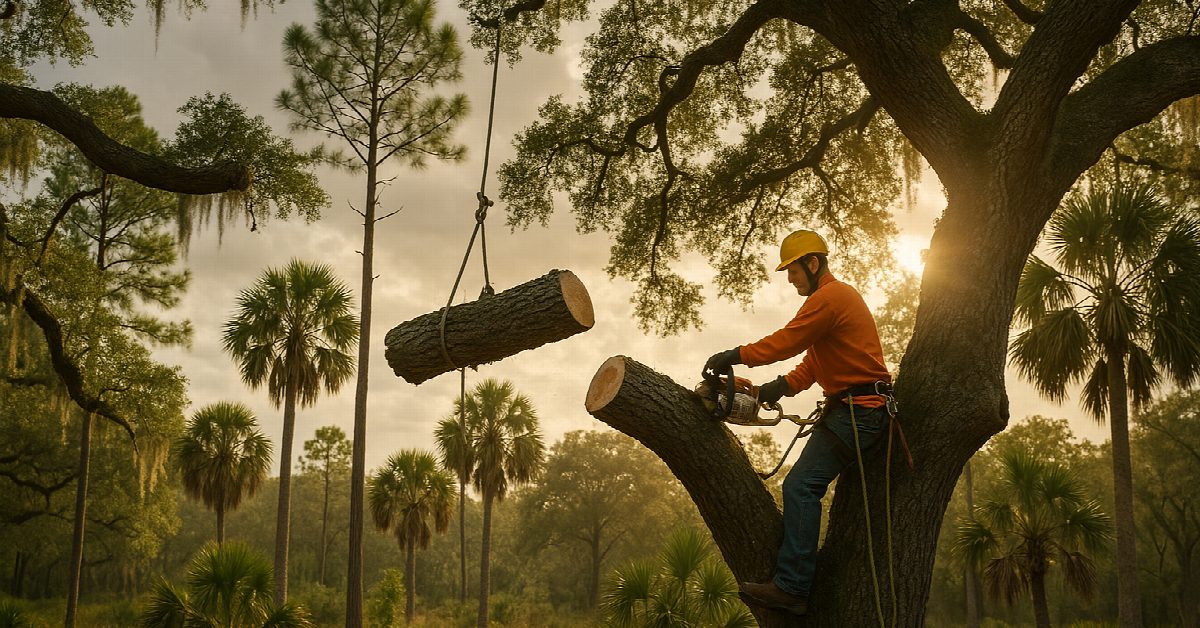
Cutting down a tree on your own property sounds simple enough, until your neighbor mentions a fine, or a county inspector shows up. Permit rules for tree removal in Sarasota and Charlotte County can genuinely surprise homeowners, and the consequences for skipping a required permit range from a small headache to a significant financial penalty. This guide walks you through exactly what the rules are, why they exist, and what you need to do before any chainsaw starts running.
Why Florida Takes Tree Removal Seriously
Florida's tree canopy does real work. Mature trees reduce stormwater runoff, drop summer temperatures by several degrees, filter air pollution, and provide habitat for wildlife that is native to this coastal region. Local governments along the Gulf Coast, including the cities and counties covering Sarasota, Venice, North Port, Port Charlotte, and the barrier islands, have watched development strip away canopy for decades. Permit requirements are one tool they use to slow that loss.
That does not mean every tree on your property is locked in place by the government. It does mean that size, species, location, and zoning all factor into whether you can remove a tree freely or whether you need official sign-off first. Understanding the rules ahead of time saves money, avoids delays, and keeps your project on track.
The Core Rule: Size Thresholds Matter Most
Both Sarasota County and Charlotte County anchor their tree protection programs around trunk diameter, measured as DBH (diameter at breast height, which is 4.5 feet above ground level). The exact threshold varies depending on whether you are inside an incorporated city or in unincorporated county land, but the general framework works like this:
- Unincorporated Sarasota County: Trees with a DBH of 8 inches or greater are generally protected and require a permit or exemption review before removal.
- City of Sarasota: Has its own tree ordinance, typically protecting trees at 6 inches DBH or greater. Rules for heritage or specimen trees are stricter.
- Unincorporated Charlotte County: Trees at 8 inches DBH or greater are typically protected, with certain species carrying additional protections regardless of size.
- City of Venice, North Port, and Port Charlotte: Each municipality maintains its own code; threshold DBH and species lists can differ from county rules.
- Barrier island communities: Siesta Key, Casey Key, Englewood, and Manasota Beach may have additional restrictions depending on whether they fall under county or municipal jurisdiction.
The practical takeaway: if the tree you are looking at is roughly the width of a dinner plate at chest height or larger, assume it is regulated until you confirm otherwise.
Species That Get Extra Protection
Certain trees are protected beyond the basic size threshold. In both counties, you will commonly encounter heightened protections for:
- Live oaks (Quercus virginiana) - The signature canopy tree of coastal Florida, protected aggressively throughout the region.
- Slash pine and longleaf pine - Common in inland parcels with natural flatwoods character throughout North Port and Rotonda West.
- Sabal palm (the Florida state tree) - Protected in many jurisdictions regardless of size, though rules vary.
- Mangroves - If you have coastal property in Siesta Key, Casey Key, or Englewood, mangroves are regulated under both state and local law. Removing them without permits can trigger serious penalties.
- Gopher tortoise habitat trees - Not a species category by name, but trees on parcels with gopher tortoises can be wrapped into the tortoise relocation permitting process.
If you are not sure what species you have, a tree specialist or your local county extension office can help you identify it before you proceed.
When You Generally Do NOT Need a Permit
The rules have genuine exemptions, and they cover a lot of common situations:
Dead trees. Both Sarasota and Charlotte County generally allow removal of dead trees without a permit, though you may need to document that the tree is in fact dead. A tree specialist's written opinion is the cleanest way to establish this.
Hazardous trees. Trees posing an immediate, documented threat to a structure or person can often be removed under an emergency or hazard exemption. Documentation still matters here. If a tree is about to fall on your house after a storm, you can act, but keep photos, get a tree specialist's assessment, and notify the county afterward. Our post on [emergency tree removal after a Florida storm]((/blog/emergency-tree-removal-after-a-florida-storm-what-to-do-first) covers the right steps to take in that situation.
Trees under the protected size threshold. If the trunk measures under 8 inches DBH (or 6 inches in some cities), you are typically free to remove it without a permit. When in doubt, measure carefully.
Agricultural land. Parcels in agricultural use, common in rural areas of eastern Charlotte County and inland Sarasota County, may be exempt from standard tree ordinances. But confirm this with the county before you act; not every rural lot qualifies as agricultural use under the relevant code.
Single-family residential exemptions. Some jurisdictions offer limited exemptions for homeowners on single-family lots, allowing removal of a certain number of trees per year or per permit cycle without formal review. These exemptions have conditions attached, so read the fine print or call your county's planning department.
The Permit Process: What to Expect
If your tree does require a permit, the process is more straightforward than most people expect. Here is the general sequence:
- Contact your county or city planning department. For unincorporated land, that is Sarasota County Planning and Development Services or Charlotte County Community Development. For incorporated areas, contact city hall.
- Submit a tree removal application. You will typically need the property address, the location of the tree on a site plan or sketch, the species, and the DBH. Some jurisdictions ask for photos.
- Mitigation may be required. Many permits come with a condition: you must plant replacement trees to offset the canopy loss. The replacement ratio (for example, two new trees for every one removed) and the species requirements vary by jurisdiction. If you cannot plant on-site due to space, some counties accept a fee paid into a tree fund instead.
- Pay the application fee. Fees are generally modest and vary by jurisdiction.
- Wait for approval. Review timelines differ, but most routine residential applications are processed within a few business days to a couple of weeks. If you are on a timeline for construction or landscaping, factor this in.
- Proceed with removal once approved. Keep your permit on-site and ensure your tree service is aware of the conditions.
Working with a professional tree removal company that knows local regulations can save you a lot of back-and-forth on this process. The team at Eagle Eye Tree & Land Services covers a wide range of locations throughout both counties and is familiar with the permit landscape in each jurisdiction.
What Happens if You Skip the Permit
This is where homeowners sometimes get burned. Removing a protected tree without a permit can result in:
- Stop-work orders if a larger project is involved.
- Fines that can range from hundreds to thousands of dollars per tree, depending on the jurisdiction and the size of the tree removed.
- Mandatory replacement requirements at a punishing ratio, sometimes three to five trees for every one illegally removed.
- Difficulty selling your property, since unpermitted tree removal can appear during a title search or inspection process.
The risk is real. Counties have received an increasing number of complaints from neighbors over unauthorized tree removal, and enforcement has become more consistent. The frequently asked questions on our site address some of the most common questions homeowners have about what can and cannot be done without professional help.
Specific Notes for Coastal Communities
If your property is in Siesta Key, Casey Key, or Englewood, you face a layer of regulation beyond the standard county ordinance. Coastal vegetation, including mangroves and certain dune plants, is protected under Florida Statute 403.9321 through 403.9333. The Florida Department of Environmental Protection and local governments share enforcement authority. Even trimming mangroves beyond what is allowed can carry penalties. If you have coastal vegetation questions, contact a tree professional who knows both the local ordinance and state law before you touch anything.
Homeowners in Osprey and Nokomis near waterfront areas may encounter similar protections for riparian vegetation. And in Venice and North Port, city-specific tree codes add another layer to research before removal.
Getting Ready for a Tree Removal Project
If you have a tree you are concerned about, whether it is visibly declining, leaning toward your house, or simply taking over your yard, the right first step is an honest assessment of the tree's condition. Our post on signs a tree on your property has become dangerous is a good place to start if you are trying to decide whether removal is even the right move.
Before hurricane season is another smart time to review your trees. Weakened or overgrown trees become projectiles in a tropical storm. A proactive pre-hurricane season tree assessment can help you decide which trees to address and give you time to pull permits before the storm window opens.
On the cost side, permit fees themselves are usually not the biggest number in a removal project. The tree size, access, proximity to structures, and what you do with the debris afterward all affect the total price. For a realistic look at what removal typically runs in this area, see our breakdown of tree removal costs in Sarasota and Charlotte County.
Quick Reference: Steps Before You Remove Any Tree
- Measure the trunk DBH at 4.5 feet above ground.
- Identify the species if you can.
- Determine whether your property is in unincorporated county land or within a city or town boundary.
- Call your county planning department or city hall to confirm whether a permit is required.
- If a permit is needed, submit your application before scheduling removal.
- Ask your tree service whether they handle permit coordination, many do.
Working with a Local Pro Makes This Easier
Navigating permit requirements is one of the less exciting parts of tree work, but it matters. A reputable local tree removal company will know which jurisdictions require permits, what the current mitigation ratios look like, and how to document a hazard exemption properly if one applies. That local knowledge saves you time and protects you from penalties.
If you are in North Port, Venice, Englewood, or anywhere else in the region and you are trying to figure out the right next step, reach out to us directly for a free on-site assessment. We'll tell you what we see, what the rules are for your specific parcel, and what the project will realistically involve, without any pressure. Tree work should be straightforward, and we think understanding the permit side of things is just part of doing the job right.
Got a tree that worries you?
Free, no-pressure on-site estimate across Sarasota & Charlotte Counties.