
How to Get Your Trees Ready Before Hurricane Season in Sarasota and Charlotte Counties
June 30, 2026 · Eagle Eye Tree & Land Services
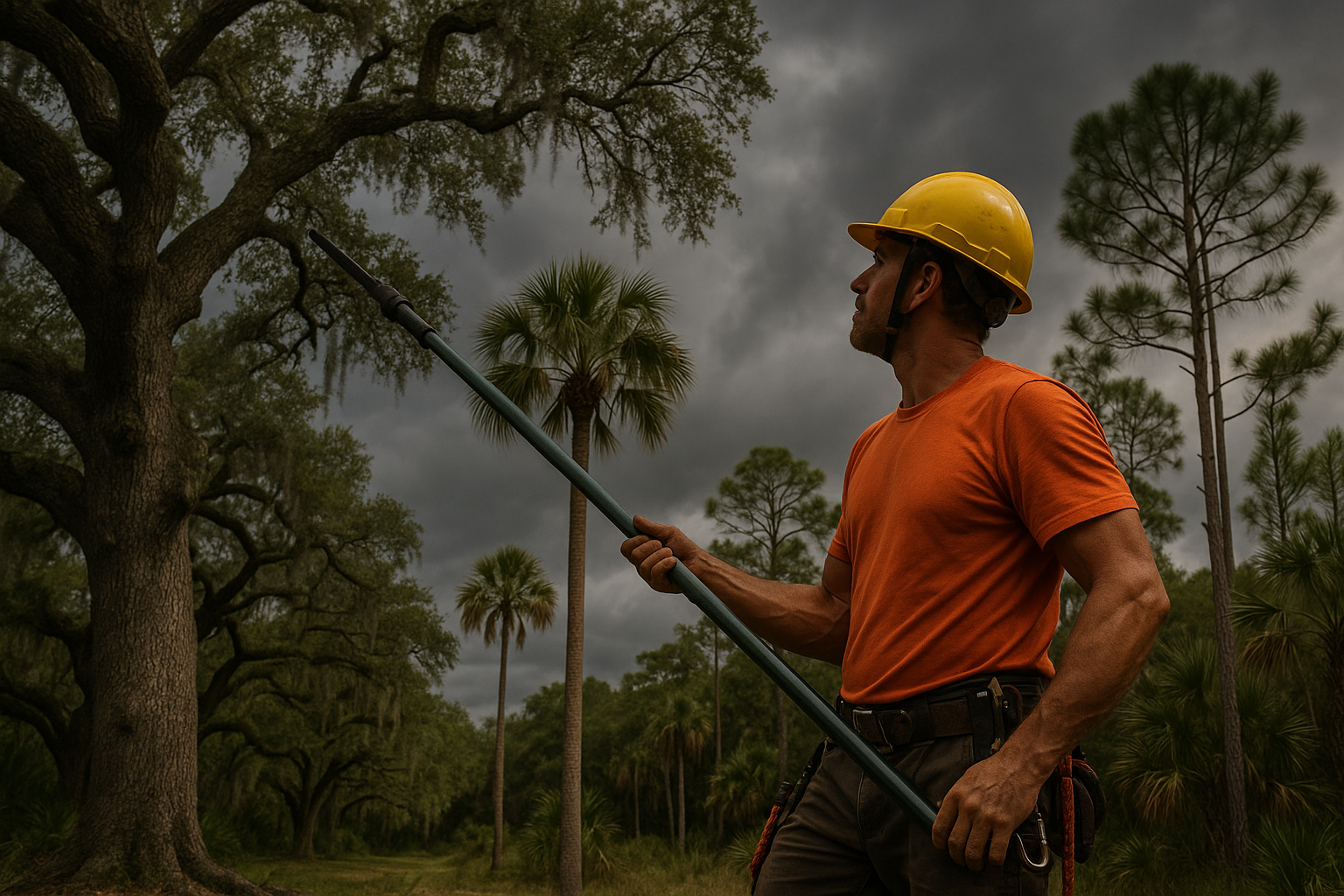
Hurricane season does not wait for you to get organized, and in Sarasota and Charlotte Counties, the storms that roll in off the Gulf can go from "tropical disturbance" to roof-level winds faster than most homeowners expect. The good news is that a little preparation in the weeks before June 1 can make a dramatic difference in how your trees behave when the wind picks up. This guide walks you through exactly what to do, why each step matters, and what to watch for on your own property.
Why trees are the biggest wild card during a hurricane
When a major storm makes landfall near Sarasota or Port Charlotte, falling trees and large limbs cause more property damage than almost any other single factor. Roof punctures, crushed fences, downed power lines, blocked driveways, and totaled vehicles - most of these losses trace back to a tree that was either already compromised or was simply never evaluated before the storm.
The frustrating part is that many of those trees looked perfectly healthy from the street. A laurel oak can carry a hidden trunk cavity for years. A slash pine can develop root rot slowly and quietly in our sandy, sometimes water-logged soil. From the outside, you see green leaves and an upright tree. Inside, the structural integrity may be gone. That is why pre-season tree care is not just about trimming - it is about understanding what you actually have on your property.
If you want to understand the warning signs before you call anyone, take a few minutes to read our post on signs a tree on your property has become dangerous. It will help you look at your trees with a more practiced eye.
Start with a full property walkthrough
Before you pick up the phone or grab a saw, walk every inch of your property and take notes or photos. You are looking for several things at once.
Lean and posture. A healthy tree grows more or less vertically, or in a consistent arc if it has always leaned toward light. A tree that has begun leaning recently - especially after a wet season when the soil is soft - is a warning sign. Check whether the root plate on the upwind side is beginning to lift out of the ground. If you see soil cracking or heaving near the base, that tree needs a professional opinion before the next storm.
The canopy shape. An unbalanced canopy with most of the weight concentrated on one side creates a leverage problem. When wind hits, that weight acts like a sail and a lever at the same time. This is especially common in older live oaks and laurel oaks that were never pruned when young.
Dead or dying branches. These are the easiest hazards to spot. Dead wood loses flexibility. Instead of bending in the wind, it snaps - and a dead branch the diameter of your arm falling from thirty feet up can do serious damage to a roof or a person standing below.
Co-dominant stems. These are two or more trunks of nearly equal size growing from a single base. The union between them is almost always weaker than a single trunk. During high winds, co-dominant stems tend to split apart at that junction. If you have a large tree with this structure, it is worth having a tree specialist look at whether cabling or removal is the right answer.
Root zone disturbances. Construction work, driveway extensions, trenching for irrigation or utilities, and even heavy vehicle traffic over roots can damage the underground anchoring system. A tree may look fine above ground for two or three years after serious root damage, then fail in the first strong storm.
Get professional pruning done early
Once you have your list, it is time to act - and the earlier the better. Tree companies across the Gulf Coast get very busy as June approaches, and the best crews book up fast. Scheduling your pruning in March or April means you get better availability, lower stress, and enough time for any fresh pruning cuts to begin callusing before storm season arrives.
Proper hurricane pruning is not about cutting a tree back as far as possible. That is actually one of the most common and damaging mistakes homeowners make. Topping a tree - cutting the main trunk or large structural branches to stubs - does not make the tree safer. It weakens it. The regrowth that follows topping is fast, weakly attached, and even more likely to break in the wind than the original branch structure.
Good pre-hurricane pruning focuses on a few specific goals:
- Thinning the canopy to let wind pass through rather than pushing against a solid wall of leaves
- Removing dead, diseased, and crossing branches that are likely to fail anyway
- Correcting structural problems in younger trees before they become serious
- Elevating the canopy to reduce wind load close to the ground
An experienced tree specialist will know which cuts accomplish these goals and which ones create new problems. Ask them specifically about hurricane pruning and structural assessment - not just general cleanup.
Our tree removal and storm cleanup services page gives you a good overview of what professional crews in this area handle, from routine pruning to full removals.
Know when removal is the right answer
Not every tree can be made safer with pruning. Some trees are too far gone, too close to a structure, or positioned in a way that makes failure almost inevitable in a major storm. Deciding to remove a tree before hurricane season is often one of the most protective decisions a homeowner can make.
Common situations where removal makes more sense than pruning include:
- A large tree with significant trunk decay or a hollow base
- A tree leaning toward the house, garage, or neighboring structure
- A tree with a history of dropping large limbs even in moderate winds
- A tree species that is inherently brittle - queen palms, for example, are notoriously poor performers in high winds compared to native sabal palms
- A tree with extensive root damage or disease
If you are unsure about cost, our post on how much tree removal costs in Sarasota and Charlotte County walks through the factors that affect price so you can go into the conversation with realistic expectations.
After any removal, you will also want to think about what happens to the stump. Our guide on stump grinding vs. stump removal explains the difference and helps you figure out which option fits your situation.
Palms deserve their own attention
Many properties in Siesta Key, Casey Key, Venice, Englewood, and throughout the coastal areas are heavily planted with palms. Palms behave very differently from hardwood trees in a storm, and they need different preparation.
The biggest mistake with palms is over-trimming the fronds. You may have heard the term "hurricane cut" used to describe shaving a palm down to just a small cluster of fronds at the top. Research from Florida's own university extension system has consistently shown that this practice weakens the palm and actually makes it more vulnerable to wind damage, not less. Palms need a healthy skirt of green fronds to protect the bud and provide some structural flexibility.
What you should do instead:
- Remove only dead or dying fronds (brown or fully yellow)
- Remove any old fruit stalks or seed clusters, which add weight and can become projectiles
- Leave at least two full rings of green fronds intact
- Have the base of the trunk inspected for signs of disease or borer damage
If a palm is already leaning significantly toward a structure, or if the top shows signs of disease (discoloration, stunted fronds, or a mushy top), have it evaluated by a professional before the season begins.
Check your trees after every significant rain
Our region's wet season overlaps almost perfectly with hurricane season, running roughly from June through September. That is not a coincidence - it is the same moisture and atmospheric energy that fuels both afternoon thunderstorms and tropical systems.
After a heavy rain, your soil becomes saturated and the holding strength around tree roots decreases noticeably. This is exactly when trees that were borderline before suddenly become urgent hazards. Make a habit of walking your property within a day or two after any significant rainfall. Look for new lean, fresh soil cracking near the base, or any new branch failures.
If you are in Englewood, Placida, or other areas near tidal waterways where flooding is more common, pay particular attention to trees in low-lying areas of your yard. Extended root saturation is one of the leading causes of whole-tree failure in our area.
Understand what happens after the storm
Even with the best preparation, some trees will fail. That is the nature of a major hurricane. If you experience a tree-related emergency, knowing what to do immediately can make a significant difference. Our guide on emergency tree removal after a Florida storm walks through the steps to take right after a storm hits, including how to assess immediate danger, when to call 911 versus a tree company, and how to document damage for your insurance claim.
One thing many homeowners do not think about in advance is what becomes of the tree once it is removed. Whether it is hauled away, ground into mulch, or left as firewood depends on the company and the situation. Our post on what happens to wood and debris after tree removal covers the options in plain terms so you are not caught off guard.
Local considerations worth knowing
Every neighborhood has its own tree challenges. Along the coastal areas of Siesta Key, Casey Key, and Manasota Beach, salt air and sandy soil create conditions where root systems tend to be shallower. Trees in these zones may appear anchored but have significantly less holding depth than inland trees.
In North Port and Rotonda West, large live oaks and laurel oaks are common and can be spectacular, but they grow very large and some have never been evaluated or maintained. If you have mature oaks that have never been professionally assessed, this spring is a good time to start.
In newer developments throughout the area, many trees were planted as part of landscaping plans and may have root systems that were never given enough space to develop properly. Compacted soil around tree bases is common in these communities and can limit root spread significantly.
Our locations page covers all the communities we serve across Sarasota and Charlotte Counties, and you can find area-specific information for the towns and neighborhoods where we work if you want to dig deeper.
A realistic timeline for getting ready
Here is a simple framework for getting ahead of hurricane season rather than scrambling when the first named storm appears:
January through March: Walk your property and make notes. Research tree care companies. This is the least stressful time to have conversations and schedule work.
March through April: Schedule and complete any major pruning or removal work. Stumps can be ground at the same time. This window gives cut surfaces time to begin healing before summer.
May: Do a final walkthrough. Address any smaller issues you can handle safely from the ground, like raking debris away from the base of trees and clearing gutters of fallen leaves.
June onward: Monitor after every significant rain event. Keep your tree company's number saved. Know where your homeowner's insurance documents are.
Getting started is simpler than most people expect
You do not need to be a tree expert to protect your property before hurricane season. You need to look carefully, act early, and work with people who know what they are doing. A good tree professional will tell you honestly what needs attention and what does not - and that second part matters just as much as the first.
If you have questions or want a set of experienced eyes on your trees before the season begins, reach out to our team. We serve homeowners across Sarasota and Charlotte Counties and are happy to take a look and give you a straight answer about what your trees actually need.
Got a tree that worries you?
Free, no-pressure on-site estimate across Sarasota & Charlotte Counties.