
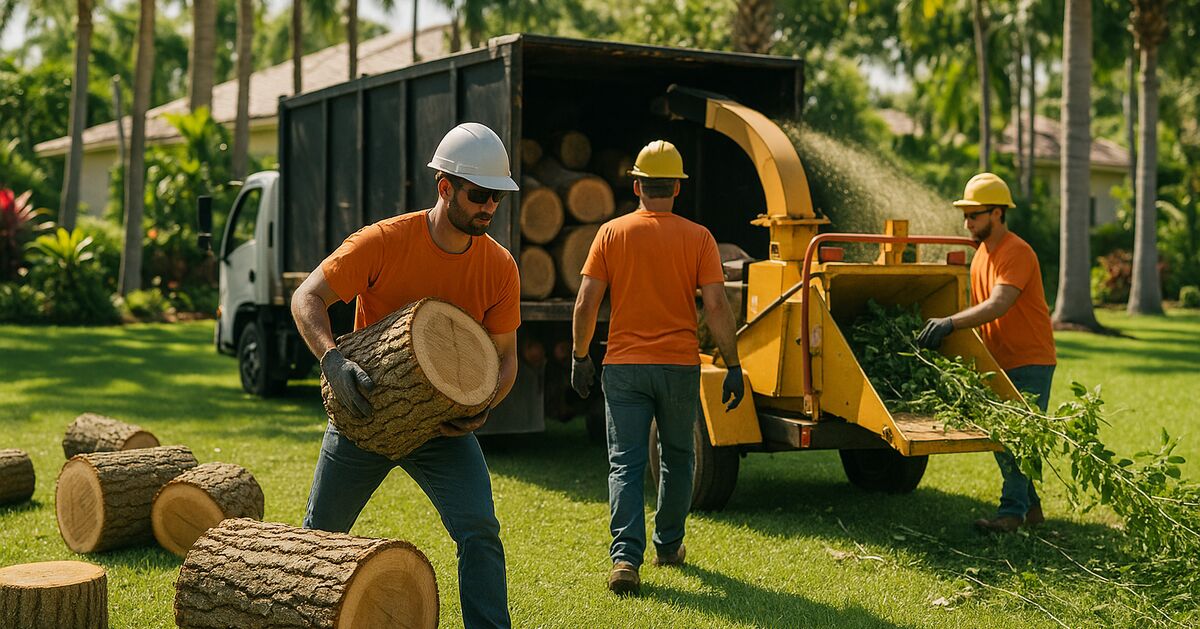
Your tree is down, the crew is packing up, and you're staring at a front yard full of logs, branches, and wood chips. What happens next? It's one of the most common questions homeowners ask us, and the answer matters more than most people expect, because the choices you make about debris affect your yard, your wallet, and even your garden for years to come.
This guide walks through every realistic option, explains the tradeoffs honestly, and helps you have a smarter conversation with your crew before the first cut is ever made.
Why the debris question deserves a real answer
Tree removal companies handle debris in wildly different ways, and not all of them are upfront about it. Some haul everything to a facility and include that cost in the quote. Others leave everything on-site by default and charge extra to remove it. A few will chip the brush on-site and leave the wood chips for you, whether you want them or not.
Knowing what to expect ahead of time prevents surprises, helps you compare quotes fairly, and lets you take advantage of useful material you might otherwise pay someone to cart away. If you want a clear sense of how debris handling affects the overall price of the job, take a look at our breakdown of how much tree removal costs in Sarasota and Charlotte County.
What "debris" actually means after a removal
When a mature tree comes down, the job site typically produces three distinct categories of material:
- Large-diameter logs - the main trunk sections, often cut into manageable rounds
- Medium branches and limbs - typically 2 to 6 inches across, too big to chip easily and too small for most lumber uses
- Small brush and leaves - the fine tips of branches, foliage, and any material under roughly 2 inches in diameter
Each of these categories can follow a different path depending on what you and the crew agree on before the job starts.
Option 1: The crew hauls everything away
This is the most popular choice among homeowners in the Sarasota and Port Charlotte areas, especially on residential lots where there simply isn't room to store or process material. The crew loads everything, logs included, into a truck and takes it to a mulching facility, a landfill transfer station, or a timber recycler.
The benefits are obvious: your yard looks clean the same day, and you don't have to think about it again. The tradeoff is cost. Hauling heavy green wood takes time and fuel, and responsible disposal facilities charge tipping fees. A full haul-away on a large job can add a meaningful amount to your invoice. If your primary goal is convenience, it's usually worth it. If you're watching the budget, read on.
Option 2: Wood chips left on-site
Most professional tree crews run a wood chipper on every job. Smaller branches go through the chipper almost automatically as the crew works. The question is what happens to those chips.
Many companies will leave the chip pile on your property at no extra charge, and sometimes at a slight discount, because it saves them a dump run. Fresh wood chips are genuinely useful:
- Garden mulch - spread 3 to 4 inches deep around shrub beds, they suppress weeds and retain moisture, which matters enormously during a North Port summer
- Pathway material - chips work well as a natural walking surface through a vegetable garden or a wooded back section of a large Rotonda West property
- Compost feedstock - mixed with grass clippings and kitchen scraps, wood chips break down over one to two seasons into excellent compost
The one caution: fresh chips from certain species, particularly eucalyptus or black walnut (less common here, but not unheard of), can be mildly allelopathic, meaning they may inhibit the growth of some plants as they break down. For typical Florida species like laurel oak, laurel cherry, or Brazilian pepper, fresh chips are generally fine for ornamental beds but best kept away from vegetable gardens until they have composted for at least six months.
Option 3: Logs kept for firewood
Yes, Florida homeowners use firewood. Not for a wood stove in December the way people do up north, but for fire pits, outdoor gatherings, and the occasional chilly January evening. If you have a fire pit or know a neighbor who does, keeping some of the larger log sections makes good sense.
The crew will typically cut the trunk into rounds of whatever length you specify, commonly 16 or 18 inches, and stack them in a spot you choose. From there, you or a firewood processor will split and season the wood. Most Florida species need at least six months of open-air drying before they burn cleanly, and some of the denser hardwoods like live oak benefit from a full year.
A few practical notes:
- Ask the crew to leave rounds in a spot accessible to a log splitter if you plan to split them yourself
- Stack wood off the ground on pallets or a rack to discourage termites and promote airflow
- Don't store large quantities of green wood directly against the house for the same reason
Option 4: Timber salvage and milling
Occasionally a removed tree has genuine timber value, particularly large-diameter live oaks, cypress, or older slash pine. Some local sawyers and custom furniture makers actively seek out urban logs, and there are portable bandsaw mills that can come directly to your property.
This option takes more coordination and isn't always practical, especially on smaller lots or when the tree has been damaged and the wood is stressed or fractured. But if you have a particularly large tree coming down, it's worth a conversation before the crew arrives. Once a log is chipped or hauled, that opportunity is gone.
Option 5: Leaving debris on-site for natural decomposition
On larger rural or semi-rural properties, particularly in areas around Laurel or the outer edges of Englewood, some homeowners choose to leave cut logs and brush in a back corner to decompose naturally. This is called "habitat piling" by wildlife managers, and it has genuine ecological value: decomposing logs support insects, lizards, frogs, and the birds that feed on them.
This approach makes no sense on a typical suburban lot, where the pile would be an eyesore and a potential termite concern too close to structures. But on acreage with room to spare, it's a legitimate and low-cost option.
What happens with stump material?
The stump is its own conversation, and it deserves one. Once the tree is down, you're left with a stump that can either be ground below grade or removed entirely, each of which produces its own type of debris: a pile of coarse wood grindings for grinding, or a significant hole and root ball for full removal.
If you're weighing those two approaches, our post on stump grinding vs. stump removal covers the tradeoffs in detail. The short version: grinding is faster and less disruptive for most residential situations, while full removal makes more sense when you need clean soil for a foundation, pool, or slab.
Stump grindings, by the way, are a form of debris in their own right. They're coarse, not as fine as wood chips, and they take a while to break down if left as fill in the hole. Many crews will haul them away or you can mix them with compost. Just don't plant grass directly over a fresh grinding pile without giving it time to settle and break down.
How storm damage changes the debris picture
After a significant storm, the debris picture changes completely. Wind-thrown trees often bring root balls with them, dragging up soil, rocks, and anything buried nearby. Broken tops may hang in adjacent trees. Debris may be scattered across an entire yard or into neighboring properties.
In those situations, safety comes before debris management. Our guide to emergency tree removal after a Florida storm walks through the right sequence of decisions, including when to call a professional immediately and how to document damage for insurance. Once the hazards are addressed, the same debris options above apply, though haul-away tends to make more sense when material is scattered and mixed with soil.
Questions to ask your crew before the job starts
Before any tree comes down on your property, confirm these points in writing or at minimum in a clear verbal agreement:
- Is debris haul-away included in this quote, or is it a separate line item?
- Will wood chips be left on-site or hauled?
- Can I keep log rounds, and will the crew cut them to a specific length?
- How will the stump be handled, and what happens to the grindings?
- If the job is halted by weather, where will partial debris be left?
Getting clear answers to these questions before work begins prevents the kind of misunderstandings that lead to unhappy customers and disputed invoices. Any reputable crew should be able to answer all of them without hesitation.
What to expect from a professional job in this area
A professional tree removal in Sarasota, Siesta Key, Osprey, Nokomis, Venice, Englewood, North Port, Port Charlotte, or anywhere else in our service area should leave your yard reasonably clean and safe, with debris handled in whatever way you agreed upon before the work started. That doesn't necessarily mean every wood chip is swept up, but it does mean no large sections of trunk left randomly in your lawn, no brush pile dumped against your fence, and no confusion about what was included.
If you'd like to learn more about how we handle the full scope of a job, from the first assessment through final cleanup, visit our services page for a rundown of what's included, or check out our story to get a sense of how we work.
And if you're still in the planning stage, wondering whether a tree actually needs to come down at all, it's worth reading through the signs a tree on your property has become dangerous. Sometimes the answer is a trim rather than a removal, which changes the debris picture entirely.
Ready to plan your removal?
Every tree job is a little different, and so is every property. The best way to get a clear picture of your options, including exactly how debris will be handled, is to talk it through with someone who's seen the situation in person.
We serve homeowners across Sarasota and Charlotte counties, from Siesta Key and Casey Key through Venice and Englewood, down to North Port and Port Charlotte. Reach out and request a free estimate and we'll walk you through every step, debris and all.
Got a tree that worries you?
Free, no-pressure on-site estimate across Sarasota & Charlotte Counties.