
How Much Does Tree Removal Cost in Sarasota and Charlotte County?
July 9, 2026 · Eagle Eye Tree & Land Services
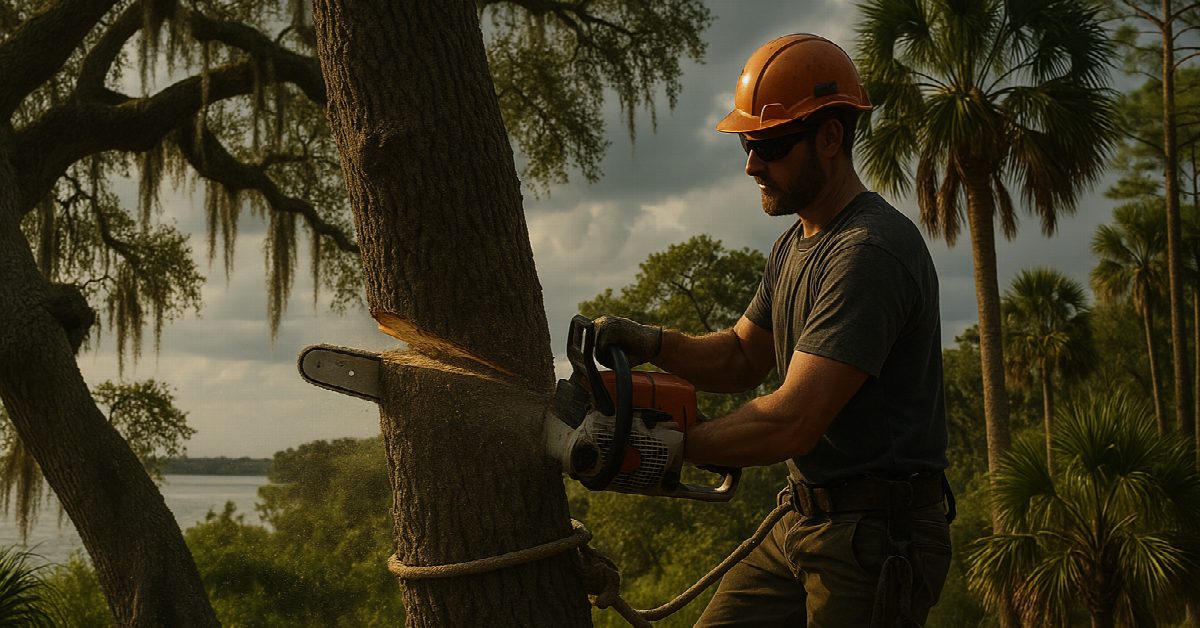
Tree removal is one of those services where homeowners often have no idea what a fair price looks like until they've already called three companies and gotten three wildly different numbers. If you're in Sarasota or Charlotte County, this guide is meant to change that. We'll walk through every factor that affects cost, explain the reasoning behind each one, and help you ask smarter questions before you sign anything.
Let's start with the most important thing: there is no single "average" price for tree removal that applies to every yard in every neighborhood. A small palm in a wide-open North Port backyard is a completely different job from a 70-foot water oak leaning over a roof in an older Sarasota neighborhood. The price difference between those two jobs can easily be $1,000 or more, and both quotes are justified.
The biggest factors that drive the cost up or down
1. Tree size
Size is the single most influential variable. Larger trees require more labor, more equipment, longer time on site, and more debris to haul away. A professional crew working on a small ornamental tree might be done in under an hour. That same crew could spend a full day on a large live oak or laurel oak, running a bucket truck, rigging ropes, and carefully lowering limbs section by section to protect your fence, your roof, and your neighbor's property.
Height is the obvious measure most people think of, but trunk diameter matters just as much. A thick, dense hardwood trunk takes significantly longer to process than a slender pine of the same height. When you're describing a tree to a company over the phone, try to mention both.
2. Species
Not all trees are equal, and local tree specialists know this well. In our area, some of the most common species we see include:
- Live oaks - Heavy, dense wood, often with wide canopy spreads that require careful rigging. One of the more labor-intensive species to remove.
- Laurel oaks - Common throughout Sarasota, Venice, and North Port neighborhoods. Similar challenges to live oaks.
- Slash pines and longleaf pines - Tall and straight, which actually makes removal somewhat more straightforward than hardwoods, though height can push costs up.
- Sabal palms (cabbage palms) - Florida's state tree. Relatively lightweight compared to hardwoods, but removing them cleanly still takes skill and equipment.
- Queen palms and royal palms - Very common in newer developments like Rotonda West. Generally faster to remove than hardwoods.
- Banyan and strangler fig - These can get very large and complex. Removal costs reflect that.
3. Location and access
Where the tree is sitting on your property matters enormously. A tree in the middle of an open lawn is easy to work around. A tree wedged between your house and a privacy fence, or overhanging a screened-in lanai, requires a completely different approach. Crews may need to work in tighter sections, hand-carry debris through a narrow gate, or use a smaller piece of equipment that takes longer.
Properties in areas like Siesta Key or Casey Key can present additional access challenges simply because lots tend to be smaller and driveways may not accommodate a full-size bucket truck. That can affect the quote.
4. Condition of the tree
A healthy, structurally sound tree is often easier to work with than a dead or diseased one. Dead wood is unpredictable. Limbs can break unexpectedly during removal, which means crews have to work more carefully and methodically. A tree that has been weakened by disease, root rot, or pest damage may also have compromised structural integrity at the base, changing how the whole job is planned.
If you're not sure whether your tree has become a hazard, take a look at our post on signs a tree on your property has become dangerous before you call for quotes. Knowing what you're dealing with helps you have a more informed conversation with any company.
5. Emergency vs. scheduled removal
Storm-damaged trees that are actively threatening your home, car, or safety understandably cost more to remove than a tree you've scheduled weeks in advance. Emergency work often happens outside of business hours, requires rapid mobilization, and may involve additional risk. After a major storm, demand also spikes sharply across the region, from Osprey and Nokomis down through Venice and Englewood.
If you've recently had storm damage and aren't sure where to start, our guide on emergency tree removal after a Florida storm walks you through exactly what to do first.
6. Stump removal or grinding
Most tree removal quotes cover cutting the tree down to a stump. What happens to that stump afterward is usually a separate line item. Stump grinding (where a machine grinds the stump down below grade) is the most common option and is typically priced per inch of stump diameter. Full stump extraction, where the entire root ball is pulled out, costs more but may be necessary in certain situations.
We've written a detailed post comparing both approaches if you want to dig into the specifics: stump grinding vs. stump removal - which do you actually need?
7. Debris hauling and cleanup
After a tree comes down, you're left with a substantial pile of wood, branches, and leafy material. Whether the crew hauls that away is a question worth asking explicitly, because "tree removal" doesn't always include debris removal in every quote. Some companies offer a chip-and-go service where branches are fed through a chipper on site and the chips are either left for you (useful for garden mulch) or hauled away. Logs may be left behind for you to split or dispose of, or removed for an additional fee.
Curious about what typically happens to all that material? We cover it in detail in our post about what happens to the wood and debris after tree removal.
Regional considerations for Sarasota and Charlotte County
Living in this part of Florida comes with a specific set of realities that affect tree work and its cost.
Permitting requirements vary by municipality. Some cities and counties require a permit before a protected or heritage tree can be removed, and failing to get one can result in fines. A reputable local company will know which jurisdictions require permits and factor that into the process. If you have a large live oak, a sabal palm, or a tree that falls under your local tree protection ordinance, ask about permitting before any work begins.
Hurricane season prep is a real driver of tree removal activity in this region. Many homeowners in Sarasota, Venice, and Port Charlotte schedule tree work each spring specifically to reduce storm risk. Removing dead, leaning, or structurally compromised trees before June 1st is genuinely smart. You can read more about getting your trees ready in our guide on how to get your trees ready before hurricane season in Florida.
Soil conditions along the coast and near waterways can affect root spread, tree stability, and how a crew plans the job. Sandy soils in coastal areas like Manasota Beach or Siesta Key behave differently from the clay-rich soils you'll find further inland toward North Port or Englewood.
How to get a quote that's actually useful
Getting a good quote isn't just about finding the lowest number. Here's what to do to make the process worthwhile:
- Get at least two or three quotes. Prices vary between companies, and a very low quote sometimes signals something important has been left out of the scope.
- Ask what's included. Does the price cover stump grinding? Debris removal? Chip hauling? Get specifics in writing.
- Ask about insurance. Any company working on your property should carry both general liability insurance and workers' compensation. Ask for a certificate before work begins. This protects you.
- Be specific when describing the tree. Tell them the species if you know it, the approximate height, and where it sits relative to your house, fence, and utility lines.
- Ask whether a permit is needed. A good local company will know the answer for your area. If they shrug it off, that's worth noting.
What about multiple trees?
If you have several trees coming down at once, most companies will price the job as a whole rather than multiplying a per-tree rate. Mobilizing equipment once and keeping a crew on site for a longer job is more efficient, and that efficiency usually gets passed along. If you've been meaning to clear several problem trees, bundling them into one job is generally more cost-effective than scheduling separate visits.
Our service area
We serve homeowners throughout Sarasota and Charlotte County, including Sarasota, Siesta Key, Osprey, Nokomis, Laurel, Venice, Englewood, Casey Key, Manasota Beach, North Port, Placida, Port Charlotte, and Rotonda West. If you're not sure whether we cover your area, our frequently asked questions page has details, or you can reach out directly.
The bottom line
Tree removal in Sarasota and Charlotte County isn't a one-size-fits-all service, and anyone who gives you a firm price without seeing the tree should be taken with some caution. The factors that matter most are tree size, species, location on the property, condition, and what the cleanup scope includes.
The best way to know what a job will cost is to have someone come out, look at the tree, and give you a written quote. We're happy to do exactly that. Take a look at our full list of tree removal and storm cleanup services or get in touch with our team to schedule a free on-site estimate.
You deserve a fair, transparent quote from people who know this area. That's what we aim to provide, every time.
Got a tree that worries you?
Free, no-pressure on-site estimate across Sarasota & Charlotte Counties.