
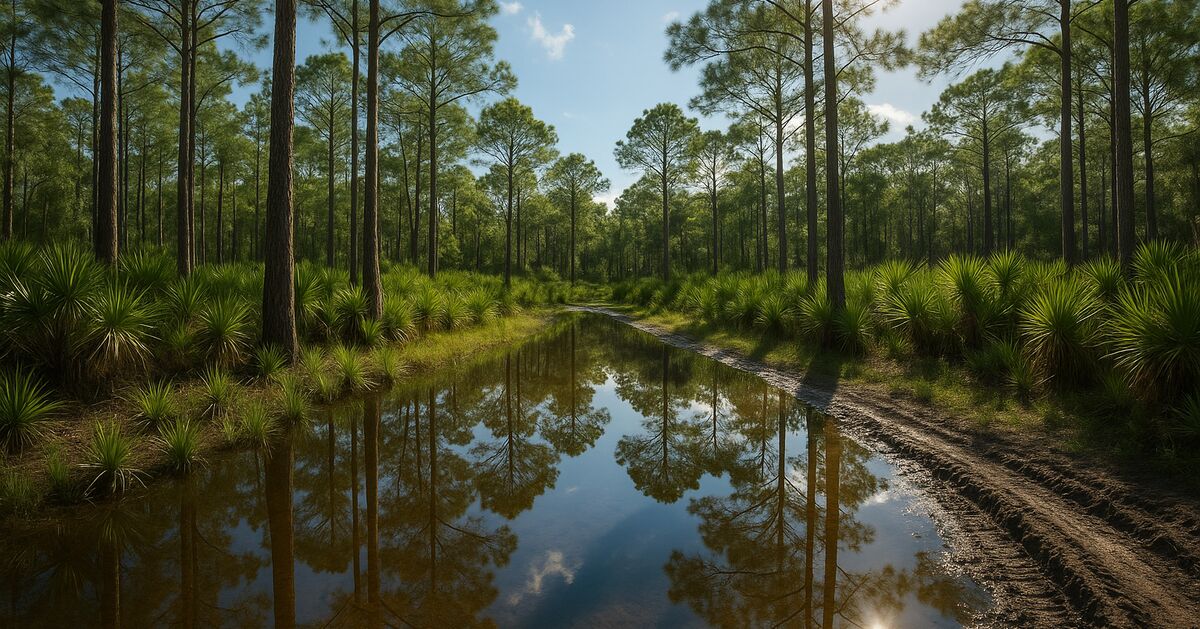
Standing water on a wooded lot changes almost everything about how that lot gets cleared - and not one of those changes is free. Buyers in North Port, Englewood, and the low-lying corridors near Myakka River regularly discover this after they've signed a purchase contract and started collecting quotes. The numbers come back higher than expected, the timeline stretches, and the reasons given by different crews don't always add up. This post explains the mechanics behind every one of those changes so you can plan realistically before the first chainsaw shows up.
Why Southwest Florida lots flood in the first place
The coastal counties from Sarasota down through Charlotte sit on a shallow water table and relatively flat terrain. Much of the undeveloped land between US-41 and I-75 - especially in North Port, Laurel, and the areas around Englewood and Placida - was historically wetland or pine flatwood that drained slowly by design. When you buy a lot that has been sitting undisturbed, you are often buying land that the soil science always intended to hold water.
That standing water is not always stormwater. It can be seasonal high-water-table expression, poor surface drainage from nearby development, or the remnant hydrology of a jurisdictional wetland. Each of those causes has different regulatory implications, which we will get to below. But from a tree-clearing standpoint, the immediate problem is simple: wet, saturated soil cannot support heavy equipment the way dry ground can.
What changes about the physical work
Ground bearing capacity and equipment selection
Tracked equipment - skid steers, mini-excavators, grapple loaders - works by distributing its weight over a larger footprint than wheeled machines. Even so, saturated mucky soil has a low bearing capacity, meaning the machine can sink, tip, or lose traction at moments that matter. A loader pushing a felled pine into a pile on dry sand behaves very differently than the same machine on ground that has been waterlogged for weeks.
Crews handling this responsibly have a few options, none of them free:
- Timber mats or crane mats. Large interlocking wood or composite mats spread equipment weight across a wider area. Hauling them to a site, placing them, and moving them as the work progresses adds labor hours and, sometimes, a separate delivery charge.
- Smaller or lighter equipment. A compact tracked loader sinks less than a full-size machine, but it also moves less material per hour, which means more hours to finish the same clearing job.
- Hand-felling with aerial cut sections. On very wet areas, crews may drop trees in shorter sections rather than letting them fall full-length, reducing ground impact. That is more chainsaw time and more skill required.
- Drying the site first. Sometimes a landowner installs a culvert or temporary sump pump to drop the water table a few inches before clearing begins. That takes time - sometimes weeks during a wet season.
Any honest estimate for a wet-lot clearing job should specify which approach the crew is planning to use. If the quote doesn't mention the ground condition at all, ask directly how they intend to manage it.
Log and debris movement
Once a tree is felled, getting it to a staging area for chipping or hauling is where wet-ground problems really compound. A grapple truck that can grab and drag logs efficiently on firm ground will tear up saturated soil and create ruts that become their own problem - especially if the lot has wetland jurisdiction attached, where disturbing the soil profile can trigger regulatory scrutiny.
Shorter haul distances help, which is why staging areas on adjacent firm ground or the road right-of-way matter so much on flooded lots. If the lot does not have road frontage with dry shoulders, that staging problem becomes a real constraint on pace.
Root zone instability
Trees that have been standing in saturated soil for an extended period may have compromised root anchorage. This is not universal, but it is a recognized pattern: prolonged saturation can promote root rot in species that are not wetland-adapted, and even in adapted species like bald cypress or pond apple, the mechanical grip of roots in wet muck is different from roots in compacted dry sand. A felled tree that should kick predictably can behave unpredictably when the hinge wood is reacting to a destabilized root zone.
This is one reason Michael Calabro (ISA Certified Arborist FL-362432A) emphasizes that lot-clearing work on wet sites warrants a site walk before any equipment is committed. An arborist's assessment of which trees are still structurally sound and which have compromised root systems changes how the felling sequence is planned - and that planning is part of working within the ANSI Z133 safety standards that govern tree work hazard assessment.
What changes about the permits and regulations
Jurisdictional wetlands
This is the piece that catches buyers off guard. Standing water is not automatically a wetland in the legal sense, but it is often a sign that one is nearby or present. Both the Florida Department of Environmental Protection and the U.S. Army Corps of Engineers have jurisdiction over wetland impacts under Section 404 of the Clean Water Act and Chapter 373 of Florida Statutes, respectively. Sarasota County and Charlotte County may also have their own wetland buffer ordinances, so it's worth confirming with local planning staff.
If any portion of a clearing job disturbs jurisdictional wetland, a permit is required before work begins - and clearing without one can result in stop-work orders, restoration requirements, and fines. A simple lot clearing project can turn into a months-long regulatory process if the preliminary site assessment wasn't done.
None of this means you can't clear the lot. It means you need to know what you're working with before the equipment arrives. A wetland determination or delineation by a qualified environmental consultant is often money well spent early in the process. Some landowners in Nokomis and Osprey have discovered mid-project that a portion of their lot was delineated wetland - and the clearing stopped until the right permits were obtained.
Tree protection ordinances still apply
Standing water doesn't suspend the local tree protection codes. Local jurisdictions such as Sarasota County, the City of North Port, and Charlotte County may have protected tree lists and removal permit requirements, so it's worth checking with the local planning office before clearing. In many cases, the permit application requires an on-site survey of trees above a certain diameter at breast height (DBH), regardless of the ground condition around them. A wet lot doesn't exempt you from that process.
Our post on tree trimming, removal, and tree care services covers the range of work that falls under regulated tree operations, and the permit question comes up often enough that we've addressed it across our FAQ page as well.
What changes about the price
Now for the part most landowners want to know. Here are the concrete factors that push the cost of a wet-lot clearing job above a dry-lot job of similar size and tree density.
Equipment surcharges and mobilization
If crane mats are required, expect a mobilization and rental cost on top of the base clearing price. The mat delivery may involve a separate truck. If lighter equipment is substituted, the slower pace increases labor hours even if the day rate is similar.
Labor hours
Wet-ground work is simply slower. Moving carefully to avoid equipment incidents, hand-felling sections rather than full-length drops, and repositioning mats as you go - all of that adds time. Time is the primary cost driver in tree work.
Site restoration
Wet ground gets churned up. If the lot has any permit conditions, covenant restrictions, or simply needs to be left in a condition where it won't erode into a neighboring property or drainage canal, some degree of surface restoration may be required. That could mean grading, seeding, or silt fencing - none of which is included in a standard clearing quote.
Longer timelines
A job that would take two days on dry ground might take four on a saturated lot, or it might be split across two weather windows if the crew needs to wait for the water to recede between sessions. That staging and return-trip cost is real, and some contractors build it into the rate while others charge separately for a return mobilization.
Debris removal
Wet wood is heavier than dry wood. A load of freshly felled pine logs that have been sitting in water for weeks weighs more per cubic yard than the same species on dry ground, which can affect haul costs if the contractor charges by weight or load rather than by the job.
What you should ask before accepting a quote
If you're clearing a lot with any standing water in the Englewood, North Port, Placida, or Myakka corridor areas, here are specific questions worth asking any crew before signing:
- Have you walked the site in current conditions, not dry-season conditions?
- What is your plan for equipment on saturated ground? Will you use mats, smaller machines, or hand-felling methods?
- Is your quote contingent on the ground being dry, or does it account for current conditions?
- Have you identified whether any standing water area may be jurisdictional wetland?
- What is included for site cleanup and debris removal, and is the wet-wood weight factored in?
- What happens to the price if the job takes longer than estimated due to ground conditions?
You can also review the general approach our tree care and removal services page describes to understand what a professional scope of work looks like before you compare estimates.
Timing matters more than you might expect
In Southwest Florida, the wet season is generally understood to run roughly June through September, with the water table typically highest from July through October, though this can vary by location. If you have flexibility in when clearing begins, the dry months - November through April - typically offer firmer ground, faster work, and fewer weather delays. That timing difference alone can meaningfully affect the final cost on a lot that marginal on drainage.
Lots near tidal areas - along the Casey Key corridor, around Manasota Beach, or near the bay-side edges of Siesta Key - have a different dynamic: tidal influence keeps soil moisture high year-round, not just seasonally. For those properties, ground condition management is a persistent factor rather than a seasonal one. Our post on Casey Key and Siesta Key wind exposure touches on some of the site-specific conditions along those barrier strips.
The connection to root and soil health on the trees you keep
Not every tree on a wet lot will be removed. If you're clearing to build and preserving some specimen trees within the footprint, saturated-soil conditions raise a separate concern: the root systems of trees adjacent to clearing work may be more vulnerable to mechanical damage when the soil is wet. Roots in saturated ground have less anchorage holding them in place, which means a piece of equipment passing near a drip line can sever more roots than the same pass on dry ground would.
The ANSI A300 Tree Care Standards speak to tree protection zone requirements during land disturbance, and those minimums become more important, not less, when the soil is wet. If you plan to retain trees during clearing, talk about protection zone fencing before equipment arrives, not after.
For a deeper look at how root systems behave under compacted or disturbed conditions, our post on what live oak soil tells you about root spread is a useful companion read. And if you're concerned about root damage from nearby utility or landscaping work planned after clearing, the post on irrigation trenching near mature trees covers that specific risk in detail.
Putting it all together
Clearing a lot with standing water isn't a dramatically different job in terms of the trees that need to come down. What changes is almost everything around those trees: the equipment strategy, the pace, the regulatory exposure, and the final bill. Landowners who understand those variables before they collect quotes are better positioned to evaluate what they're being told, spot an estimate that hasn't accounted for actual site conditions, and avoid mid-project surprises that stall a build timeline.
If you own or are considering purchasing a wooded lot with drainage concerns anywhere from Sarasota down through Venice, Osprey, Nokomis, or into the Charlotte County communities like Englewood and Placida, a site consultation before clearing begins is the most cost-effective thing you can do. The variables are site-specific enough that a phone conversation can't substitute for eyes on the ground.
You can reach our team through the contact page to set up a walkthrough, or browse our full list of service areas to confirm we cover your location.
Got a tree that worries you?
Free, no-pressure on-site estimate across Sarasota & Charlotte Counties.