
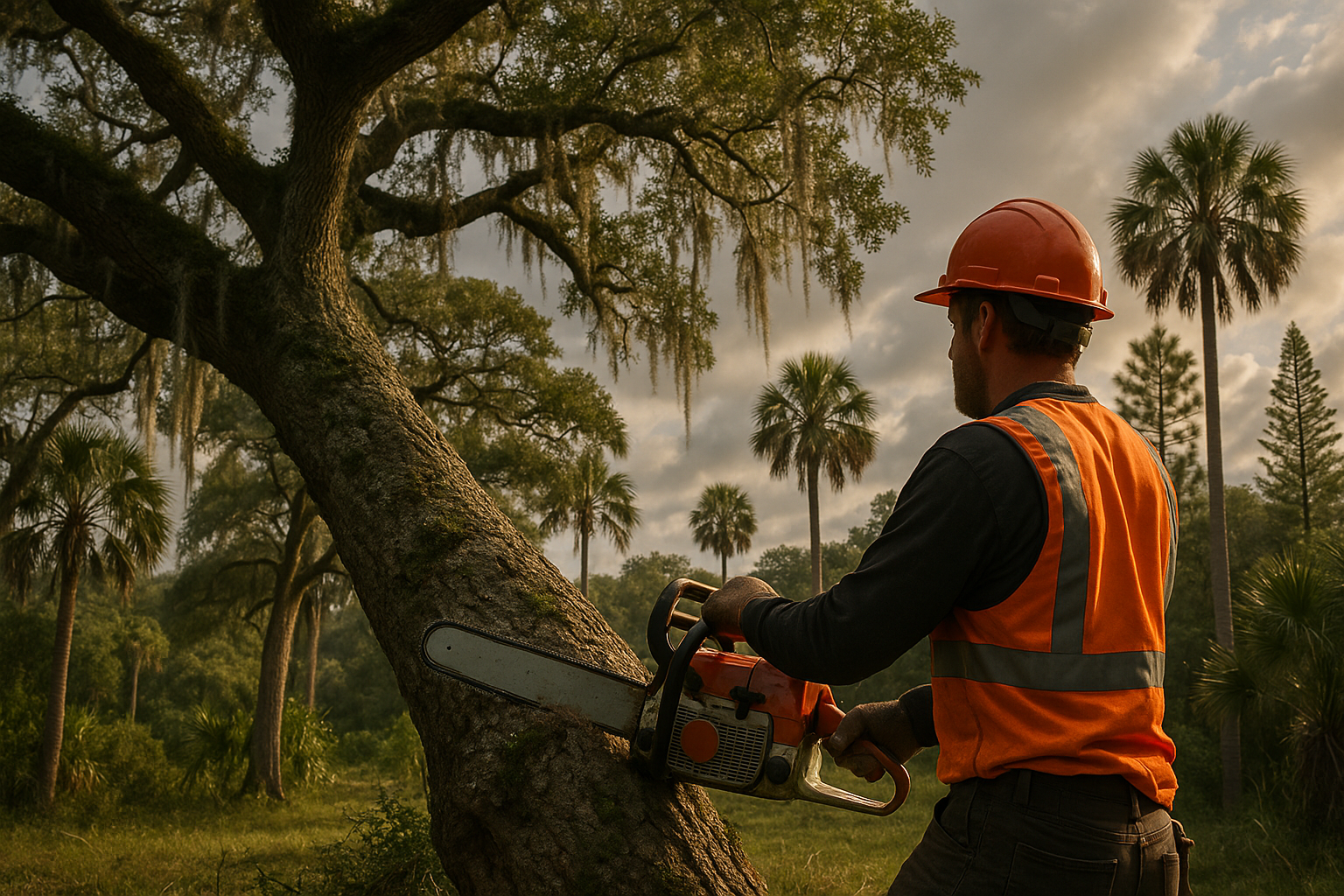
Cutting down a tree on your own property sounds simple enough, until you get a knock on the door from a code enforcement officer and a fine that costs more than the tree removal itself. Permit rules for tree removal in Sarasota and Charlotte County catch a surprising number of homeowners off guard, and the consequences of ignoring them range from financial penalties to being forced to replant at your own expense. This guide breaks down exactly what the rules are, why they exist, and how to stay on the right side of them.
Why Tree Permit Rules Exist in the First Place
Southwest Florida's tree canopy does a lot of heavy lifting. Mature trees lower surface temperatures in neighborhoods like North Port and Sarasota by several degrees, reduce stormwater runoff into the Gulf and local waterways, and provide habitat for native wildlife. Local governments protect this canopy because once a 50-year-old oak is gone, no ordinance can bring it back quickly.
Permit requirements are essentially a check-and-balance system. They give local officials a chance to review whether a removal is truly necessary, whether mitigation (replanting) is needed, and whether a protected or heritage species is involved. They are not designed to be punitive toward homeowners who have a legitimate reason to remove a tree. In practice, routine permits are approved regularly. The process just requires that someone in the know takes a look first.
The Short Answer: It Depends on the Jurisdiction
Here is the honest answer: whether you need a permit depends on which county or municipality owns jurisdiction over your property, the size and species of the tree, and sometimes even the zoning of your lot.
Both Sarasota County and Charlotte County have tree protection ordinances, but cities and towns within those counties, such as the City of Sarasota, Venice, North Port, and Port Charlotte, may have their own additional layers of regulation. Always check at the most local level first.
Sarasota County Tree Removal Rules
Sarasota County's tree protection rules are found in its Unified Development Code. Unincorporated Sarasota County protects trees above a certain diameter at breast height (DBH), which is measured at 4.5 feet above the ground. The county also places extra protection on specific species, including grand oaks, Florida native trees, and trees within designated conservation areas.
Some important things to know for Sarasota County:
- Protected species get extra scrutiny. Live oaks, laurel oaks, sabal palms (the Florida state tree), and certain others may require additional documentation regardless of size.
- Vacant lots have stricter rules. If you own an undeveloped lot and want to clear it for construction, the permitting process is more involved than simply removing one tree from an established yard.
- Coastal and mangrove areas around Venice, Nokomis, Osprey, Siesta Key, and Casey Key have additional environmental overlays. Removing vegetation in or near these zones can trigger both county and state-level review.
- In the City of Venice and North Port, the municipalities have their own ordinances layered on top of the county's. North Port, for example, has been actively expanding its urban forestry protections in recent years.
Charlotte County Tree Removal Rules
Charlotte County's Land Development Code includes tree protection standards that apply to unincorporated areas of the county. This covers much of the region, including parts of Port Charlotte, Rotonda West, Placida, Englewood, and surrounding areas.
Under Charlotte County regulations, you generally need a permit to remove any tree that meets a minimum size threshold. That threshold is typically measured by the diameter at breast height (DBH). Trees at or above the threshold (commonly set at 8 inches DBH or larger, though you should confirm the current code) are considered protected and require review before removal.
Some key points for Charlotte County homeowners:
- Heritage trees receive the strongest protection. These are large, old specimens that the county designates as community resources. Removing a heritage tree requires a much more detailed application and is rarely approved without extraordinary circumstances.
- Hazard exemptions exist. If a tree specialist documents that a tree poses an imminent threat to life or structures, the permit process can often be expedited or waived in genuine emergencies.
- Replanting requirements are common. Even when removal is approved, you may be required to plant replacement trees of a specified size and species to offset the canopy loss.
- Storm damage situations are sometimes treated differently. After a hurricane or tropical storm, emergency provisions often apply. See our post on emergency tree removal after a Florida storm for more detail on how that process works.
If you are in the City of Port Charlotte rather than unincorporated Charlotte County, the city may have its own tree ordinance administered through the city's planning and zoning department. The thresholds and process can differ from the county's, so confirm with the city directly or ask your tree service to help you navigate it.
Cities With Their Own Rules: A Quick Breakdown
Even within Sarasota and Charlotte counties, several cities add their own requirements:
City of Sarasota: The city enforces its own tree ordinance independently of the county. Protected trees are defined by DBH, and removal permits are reviewed by the city's Urban Forester. Replacement trees are routinely required.
City of Venice: Venice places a premium on its streetscape trees and green corridors. Permits are required for protected-size trees, and the city can be stricter than the county on replacements.
North Port: North Port covers a large geographic area with a mix of urban and rural character. Its tree ordinances reflect that complexity, with different standards applying to different zoning districts.
Port Charlotte: Port Charlotte's zoning and development rules include tree preservation requirements, and the city has been increasingly attentive to canopy coverage in established residential neighborhoods.
Barrier island communities like Siesta Key, Casey Key, Englewood, and Manasota Beach are environmentally sensitive, and tree removal near the dune systems or in wetland-adjacent areas is subject to additional review.
When You Typically Do NOT Need a Permit
There are situations where permit requirements are commonly waived or do not apply at all. These vary by jurisdiction, so always verify with your local authority, but common exemptions include:
- Trees below the minimum DBH threshold (often under 8 inches in diameter, but check locally).
- Dead trees that pose an immediate hazard, provided you can document the condition. A written assessment from an experienced tree specialist strengthens your case considerably.
- Invasive exotic species that appear on local or state removal lists, such as Brazilian pepper or Australian pine. Removing invasives is often actively encouraged without a permit.
- Trees damaged by a named storm during a declared state of emergency, when emergency ordinances temporarily ease the normal process.
- Agricultural properties in rural areas, which may be exempt under specific agricultural land use designations.
Even if you believe an exemption applies, it is worth a quick call to your local planning or code enforcement office to confirm. That five-minute phone call can save you a significant headache.
What Happens If You Skip the Permit?
This is where things get expensive. Code enforcement in both counties monitors unpermitted tree removal through neighbor complaints, aerial imagery reviews, and routine patrols. The consequences can include:
- Fines per tree removed, which in some jurisdictions can reach several hundred to several thousand dollars per violation.
- Mandatory replanting orders, requiring you to plant replacement trees at your own cost, often at a larger-than-standard size.
- Holds on future building permits for your property until violations are resolved.
- Liens on your property if fines go unpaid.
The financial risk of skipping the permit almost always exceeds the cost of simply getting one. If you are curious about what the overall project budget looks like including permits, our guide on how much tree removal costs in Southwest Florida walks through the realistic cost factors in detail.
How the Permit Process Actually Works
For most routine residential removals, the permit process is not as intimidating as it sounds. Here is what it typically looks like:
- Identify your jurisdiction. Are you in the county or a city? This determines which office you contact.
- Gather basic information. You will likely need to know the species, size (DBH), location on the lot, and the reason for removal.
- Submit an application. Many jurisdictions now accept online applications. Fees are generally modest for a single tree permit.
- Await review. Simple residential removals are often turned around in a few business days to a couple of weeks.
- Receive approval (with any conditions). The permit may come with a replanting requirement or a deadline for completion.
- Proceed with removal and document it. Keep a copy of your permit on-site during the work.
A reputable tree removal company will help you navigate this process, pull the permit on your behalf if authorized to do so, and ensure the work is done in compliance with the conditions. Our services page outlines what we handle from start to finish, including permit coordination.
Common Mistakes Homeowners Make
Even well-intentioned homeowners run into trouble. Watch out for these common missteps:
- Assuming the contractor handles everything. Some tree companies are not familiar with local permit requirements or may cut corners. Always confirm in writing that permits have been pulled before work starts.
- Confusing county and city rules. Living on city/county boundary lines, or in a community that straddles jurisdictions, can create genuine confusion. Our team that serves North Port and surrounding areas knows these boundary situations well.
- Removing a tree before a sale without checking deed restrictions. HOA communities and deed-restricted neighborhoods often have their own tree removal rules on top of the county's. Violating HOA rules can create a separate legal dispute entirely.
- Waiting too long after storm damage. After a hurricane, waiting weeks to address a leaning or partially fallen tree can actually complicate both the safety situation and the permit pathway. Our post on getting your trees ready before hurricane season covers how to stay proactive so you are never in that position.
- Not checking for heritage or specimen tree status. Before you assume a big old oak is just another tree on your lot, look up whether it has been designated by the county or city. A quick check saves a major problem.
Getting a Professional Assessment First
If you have a tree you are concerned about, the most practical first step is having a professional assess it. An experienced tree specialist can tell you whether the tree actually needs to come down, whether it qualifies for a hazard exemption, what species it is, and whether its size triggers the permit threshold. That assessment often shapes the entire permit strategy.
It also matters because your concern might turn out to be nothing, or it might reveal a genuinely dangerous condition that changes how you proceed. Our post on signs a tree on your property has become dangerous is a good starting reference for understanding what to look for before you even call anyone.
The Bottom Line
The permit rules for tree removal in Sarasota and Charlotte County are real, they vary by location, and they carry real consequences if ignored. But they are navigable. Most homeowners who have a legitimate reason to remove a tree, whether it is dead, diseased, storm-damaged, or simply in the wrong place, are able to get permits approved without much trouble when they follow the process correctly.
Working with a local tree service that knows the specific rules in your area, whether that is Englewood, Venice, Nokomis, or anywhere else across our service area, is the most reliable way to handle it cleanly. If you have questions about a specific tree or situation, reach out to us directly and we will help you figure out the right path forward before a single branch is touched.
Got a tree that worries you?
Free, no-pressure on-site estimate across Sarasota & Charlotte Counties.