
The crew pulls away, the stump grinder goes quiet, and you're left staring at a patch of raw earth where a tree used to stand. That moment can feel anticlimactic, even a little disorienting. What you do in the weeks and months after a tree comes down matters as much as the removal itself, especially in Southwest Florida, where our sandy soils, heavy rains, and blazing sun will quickly expose any shortcuts.
This guide walks you through every stage of yard restoration after tree removal: filling and grading the hole left behind, dealing with leftover roots and wood chips, choosing a replacement tree that will actually thrive here, and knowing when to call in extra help. Whether the tree came down on your property in North Port, Venice, Englewood, or out on Siesta Key, the steps are largely the same.
Why the hole left by stump grinding needs attention right away
When a stump grinder does its job, it shreds the stump down several inches below grade, sometimes as far as 12 inches depending on stump diameter. What remains is a depression packed with a mixture of wood chips, sawdust, and loose disturbed soil. That mixture behaves nothing like stable ground.
A few problems that show up if you leave it alone:
- Settling. Wood chips decompose and shrink. The depression you see on day one will sink further over the next few months, leaving a noticeable low spot that collects water.
- Fungal activity. Buried wood is food for fungi. In our humid climate, mushrooms can pop up repeatedly around the old stump zone for a year or more as the root mass decomposes underground. This is cosmetically annoying but usually not harmful unless you have young children or pets that might eat them.
- Trip hazards. A sunken patch in the lawn is an injury waiting to happen, especially in a yard where kids play or guests walk after dark.
- Poor drainage. Low spots in Florida yards fill fast during the rainy season. Standing water breeds mosquitoes and can saturate root zones of nearby plants.
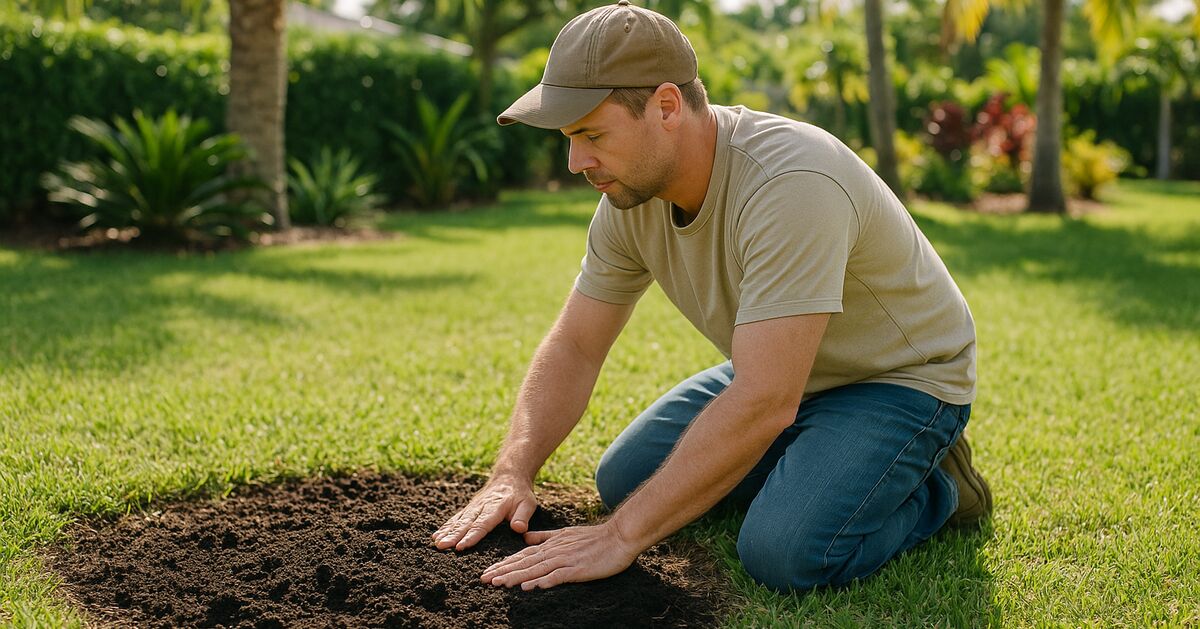
The fix is straightforward: rake out as much of the wood chip debris as you reasonably can, then backfill with clean topsoil. In Sarasota and Charlotte Counties, our native soil runs sandy and low in organic matter, so mixing in some quality fill dirt or a topsoil blend helps the ground settle more uniformly. Tamp it down lightly, mound it just slightly above grade to account for settling, and water it in. Come back in two or three weeks and add more soil if it has sunk. For large trees, you may need to do this two or three times over a season before the ground stabilizes.
What to do with all those leftover wood chips
After grinding, you will typically have a fair volume of coarse wood chip material. Many homeowners in Sarasota and Venice use this directly as mulch in nearby planting beds, and that works fine as long as you keep a few rules in mind.
First, do not pile fresh chips directly against any plant stem or tree trunk. That thick, moist contact promotes rot and invites pests. Keep a few inches of clearance around any plant base.
Second, avoid using chips from a diseased tree in a garden bed where you plan to plant something susceptible to the same disease. If the tree came down because of laurel wilt, root rot, or a fungal infection, it is smarter to have the chips hauled away rather than spread around.
Third, fresh chips are "hot" as they decompose and can temporarily tie up nitrogen in the soil as microbes break them down. This is not a big deal in a mulch path or ornamental bed, but it can yellowing of grass if you work chips into a lawn area. Let them compost for a season first, or use them as a surface mulch only.
If you would rather not deal with chips at all, your tree service should haul them. Check out what happens to the wood and debris after tree removal for a full breakdown of your options.
Regrading and restoring lawn grass
A full restoration of the area starts with getting the grade right. This means the surface should slope gently away from your home's foundation, ideally one inch of drop per foot of horizontal distance for the first six feet. In low-lying communities like Port Charlotte or parts of Englewood near the water, proper grading is especially important because water has nowhere else to go.
After backfilling and tamping the stump hole, assess the broader area. Did the tree's surface roots leave ridges or humps in the lawn? Did equipment traffic during the removal compress or rut the grass nearby? Address these now, before you lay new sod or seed.
For re-establishing grass:
- St. Augustine sod is the most practical choice for most yards in this region. It knits together quickly, handles our heat and humidity, and is widely available. Lay it directly over prepared, lightly loosened soil, water it twice daily for the first two weeks, then taper off as roots establish.
- Bahia grass seed works well for larger open areas, especially in Rotonda West or North Port where irrigation may be limited. It is drought tolerant and grows back vigorously even if it browns out in a dry spell.
- Avoid Bermuda grass in heavily shaded areas. If the tree that came down was providing canopy cover for adjacent turf, that turf may now get full sun for the first time in years. The grass mix that thrived in shade may now struggle and need to be replaced.
Give the restored area at least 30 days before heavy foot traffic. The stump hole zone will remain softer than surrounding ground for several months.
Understanding what is still underground
Tree removal takes away what is visible, but the root system stays in the ground and continues to change the soil around it for years. Large live oaks, slash pines, and laurel oaks can have lateral roots extending 20 to 30 feet from the base. As those roots decay, they create voids, change drainage patterns, and can shift the soil structure slightly.
In most residential situations in Venice or North Port, this underground decomposition is gradual enough that it does not cause structural problems. But there are a few scenarios worth watching:
- Raised root ridges in the lawn will gradually flatten as roots decay. You can speed this up by running a stump grinder over major surface roots if your tree service offers that service.
- Near foundations or driveways, decomposing roots occasionally leave voids that cause minor cracking. This is more common with large trees removed very close to a structure. If you notice new cracking in a sidewalk or driveway section over the year following removal, it is worth having a concrete professional look at it.
- Near irrigation or utility lines, decomposing root mass can shift over time. If you notice your sprinkler heads tilting or a drip line getting displaced, a root remnant shifting underground could be the reason.
If you had a large tree close to your home and are now noticing any structural concerns, it may be worth cross-referencing with our post on how close is too close: trees near your house, fence, and utility lines to understand what the proximity may have meant for your foundation all along.
Replanting: choosing the right tree for the spot
This is the part most homeowners underestimate. Southwest Florida has a harsh, specific climate, and the wrong tree in the wrong place will either die in a drought, blow over in a storm, or eventually cause the same problems the removed tree did.
Here are the most important questions to ask before replanting.
What is the mature size of this tree, and does the space actually accommodate it? Many removal jobs happen precisely because a tree was planted too close to a house, driveway, or utility line. Do not repeat that mistake. Measure the available space and cross-reference with the mature canopy spread and root zone of any species you are considering. Our services page gives a sense of what removal eventually costs when a tree grows into a problematic spot, which is motivation enough to plan ahead.
Is this a high-wind environment? Coastal properties on Siesta Key, Casey Key, and Manasota Beach face exposure to Gulf winds and occasional hurricane-force gusts. In those spots, shorter, sturdier native species like sabal palms, buttonwood, or sea grape are more resilient than large canopy trees. Deeper inland in North Port or eastern Charlotte County, a live oak or southern red cedar can be a beautiful long-term investment.
Does the spot have good drainage? Florida's rainy season dumps 50-plus inches of water per year on us, much of it in short, intense bursts. Trees planted in spots with poor drainage will develop stressed, shallow root systems. Bald cypress and pop ash can handle wet feet, but most ornamental and shade trees need soil that drains within a few hours of heavy rain.
Will the tree be irrigated? Newly planted trees need consistent moisture for the first year to establish their root systems, even drought-tolerant species. If the spot is not on an irrigation zone, you need to be prepared to hand-water regularly through the first dry season (typically November through April).
Native versus non-native choices Native species like the sabal palm (Florida's state tree), live oak, gumbo limbo, and southern magnolia are adapted to local soils and pests. They also support native wildlife. Non-native ornamentals can be beautiful, but many require more care and some, like the invasive camphor tree, are better avoided altogether.
For most Venice or Sarasota homeowners replacing a medium to large shade tree, a live oak planted at least 20 feet from any structure is a satisfying long-term choice. For something faster growing with less spread, a crape myrtle or native red maple works well in tighter spots.
Timing your replanting in Southwest Florida
The best planting window in our region runs from late September through early April. Cooler temperatures reduce transplant stress, and the beginning of this window often catches the tail end of the rainy season, giving new roots a moist start without requiring as much supplemental irrigation.
Avoid planting in the peak of summer (June through August) if you can help it. The combination of extreme heat, intense midday sun, and saturated soils from afternoon thunderstorms stresses young trees in ways that are hard to overcome.
If you have just had a tree removed during summer, it is perfectly fine to wait a few months before replanting. Use the time to get the soil grade right, let the stump hole settle, and research your species options.
When to bring in additional help
Most yard restoration after tree removal is DIY-friendly, but a few situations call for a professional eye.
If the removed tree was within 10 feet of your home's foundation, having a landscape grading contractor assess drainage before you replant is a smart investment. Improper grading right against a foundation is one of the more common causes of moisture intrusion in Florida homes.
If the area is large, say a tree that shaded a significant portion of your yard, a landscape designer familiar with our local plant palette can help you plan the space so the replacement plantings work together rather than competing for light and water.
And if you had an emergency removal after a storm, the yard may need more attention than a standard removal site. Storm events often leave compressed, debris-laden soil and damaged surrounding vegetation that needs separate assessment. Our post on emergency tree removal after a Florida storm covers the immediate steps, but the longer-term yard restoration follows the same principles described here.
A simple timeline to follow
Here is a practical sequence to keep the project organized:
- Day of removal: Confirm with your tree service what stays and what gets hauled. Get the stump ground if you have not already.
- Days 1 to 7: Rake out wood chip debris from the stump hole. Begin backfilling with clean topsoil. Water the area.
- Weeks 2 to 4: Monitor for settling. Add topsoil as needed. Assess surrounding lawn for ruts or compaction from equipment.
- Week 4 to 6: Once the stump zone has stabilized, lay sod or seed the area. Address any surrounding lawn damage.
- Months 2 to 3: Evaluate drainage. Confirm the area is level and water runs away from structures.
- Month 3 onward (or next fall planting window): Select and plant replacement tree. Stake if needed, mulch the root zone, and begin a consistent watering schedule.
Final thoughts
Removing a tree is never just a subtraction. It changes the light, the drainage, the wind exposure, and the feel of the whole yard. The spot that is left behind deserves real attention, not just a quick fix. Done right, the restoration process gives you a chance to correct past planting mistakes, improve drainage, and choose a tree that fits the space and the climate better than the one that came down.
If you are not sure where to start, or if you have a larger or more complicated site to deal with, reach out to our team for a conversation. We cover all of Sarasota and Charlotte Counties, from Sarasota tree removal and storm cleanup to work in Venice, North Port, Port Charlotte, and everywhere in between. See our full service area if you are not sure we cover your neighborhood.
The goal is a yard that looks better after the tree is gone than it did when the problem tree was still standing. That outcome is very achievable with a little planning and patience.
Got a tree that worries you?
Free, no-pressure on-site estimate across Sarasota & Charlotte Counties.