
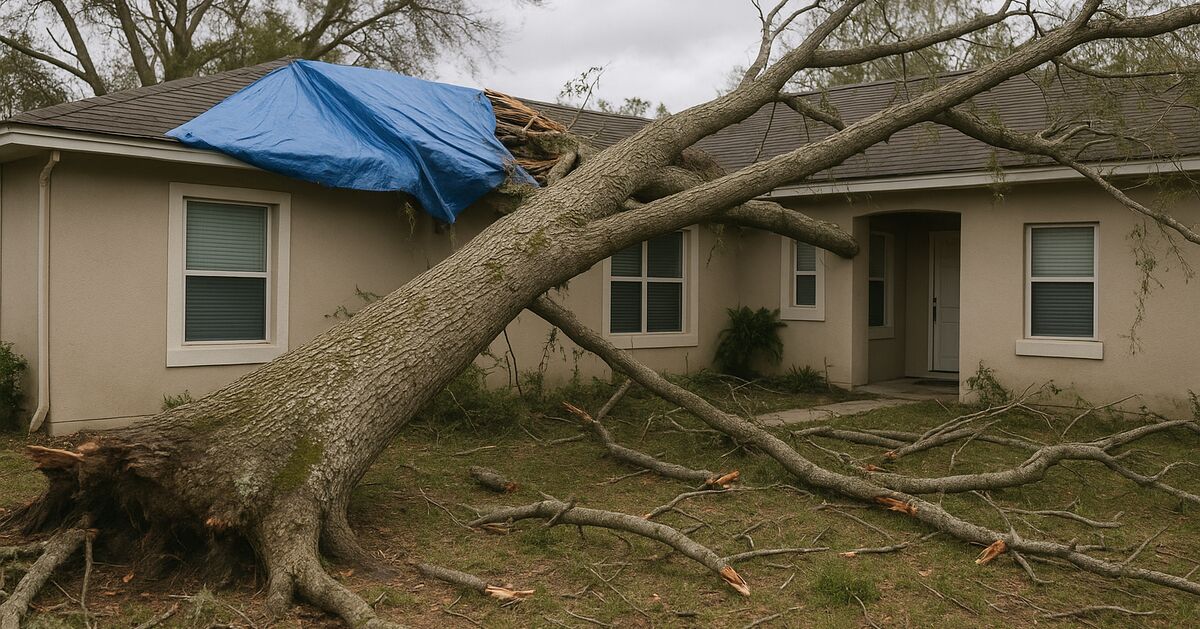
A tree lands on your roof after a storm, and suddenly the most urgent question isn't about the tree - it's about who is going to pay to get it off there. Florida homeowners ask us about insurance coverage more than almost anything else, and it's easy to see why. The answer is genuinely complicated, and the stakes are high. Let's walk through exactly how it works so you're not caught off guard.
The short answer: it depends on what caused the tree to fall
Insurance companies don't write one blanket rule that covers every fallen tree. They care about two things above all else: what caused the tree to fall, and what the tree landed on. Those two factors will drive almost every coverage decision your adjuster makes.
In Florida, most standard homeowner's policies (HO-3 and similar forms) cover damage caused by what the industry calls a "covered peril." That list typically includes:
- Wind (including named storms and hurricanes)
- Lightning strikes
- Hail
- Fire
- The weight of ice, sleet, or snow (less common here, but it exists in the policy language)
If a tree falls during a hurricane and crushes your fence or punches through your roof, there's a solid chance your insurer will cover at least part of the removal and repair - because wind is a covered peril.
If a tree falls on a calm, sunny afternoon because it was quietly rotting from the inside for years, that's a different conversation entirely. Insurers often classify that as a maintenance issue, and maintenance issues are almost never covered.
When a tree falls on your house or another structure
This is where coverage is most likely to kick in. If a tree (yours or even your neighbor's) falls and damages a covered structure on your property - your home, an attached garage, a screened lanai - your insurance will typically pay to:
- Remove the portion of the tree that is on or against the damaged structure
- Repair the structure itself
The key phrase there is "on or against the damaged structure." Insurers generally won't pay to remove a tree that fell harmlessly into your yard, even if it's a massive trunk that's now blocking your entire lawn. No structural damage, no coverage for removal - at least under most standard policies.
That said, some policies do include a small debris-removal allowance (often $500 to $1,000) even when a tree lands in the yard without hitting anything. Read your declarations page carefully, or call your agent and ask directly.
When a tree falls in your yard but hits nothing
This situation is frustratingly common after Florida storms. A big laurel oak in Englewood or a slash pine in North Port comes down in a gust, misses the house entirely, and you're left with a 60-foot tree lying across your backyard. Your first thought: "Great, insurance will handle this."
More often than not, it won't. If no structure was damaged, most policies treat the cleanup as the homeowner's responsibility. You'll need to arrange and pay for tree removal and debris cleanup out of pocket.
This is one of the strongest arguments for building a relationship with a local tree service before a storm hits, rather than after. Post-storm demand in the Sarasota, Venice, and Port Charlotte areas spikes fast, and costs can reflect that.
Whose tree is it, and does it matter?
Yes, it matters - but maybe not the way you'd expect.
If your neighbor's tree falls onto your property and damages your home, your insurance is still typically your first call, not your neighbor's. You would file a claim on your own policy. Your insurer might then try to recover costs from your neighbor (a process called subrogation), but that usually only happens if your neighbor was demonstrably negligent - meaning they knew the tree was dead or diseased and did nothing about it.
If a healthy tree simply blows over in a storm, your neighbor generally has no legal liability, even if it lands squarely on your car or porch. This surprises a lot of homeowners in communities around Osprey and Nokomis, but it's the consistent legal standard in Florida.
The practical takeaway: don't assume your neighbor's policy will bail you out. Carry adequate coverage on your own home, and pay attention to the trees on your side of the property line too. If you're uncertain whether a tree on your property has become a liability, our post on signs a tree has become dangerous is a good place to start.
What about hurricane-specific deductibles?
This is a Florida reality that catches a lot of people off guard. Many homeowner's policies in this state carry a separate hurricane deductible that is much higher than the standard deductible. It's often calculated as a percentage of your home's insured value - commonly 2% to 5% - rather than a flat dollar amount.
On a home insured for $400,000, a 2% hurricane deductible means you're covering the first $8,000 in damage yourself before insurance pays a cent. That changes the math on a lot of tree-removal situations, especially when the damage is real but limited.
Before you file a claim, it's worth calculating whether the payout will actually exceed your deductible by enough to justify the potential impact on your future premiums. Talk to your agent about this. It's not always worth filing a claim for smaller incidents.
What insurers look for after a storm
When you do file a claim, the adjuster's job is partly to assess the damage and partly to assess the tree. They will look at:
- The condition of the tree before it fell. Was it healthy? Was there visible decay, root heave, or prior storm damage? A visibly dead or diseased tree that a homeowner ignored will raise questions about maintenance.
- What caused it to fall. Was there a documented storm? Weather records and news reports matter here.
- What it hit. Photos of the damage to your structure are essential.
Document everything before any cleanup begins. Take wide-angle photos of the tree in relation to the house. Get close-ups of the root ball, the trunk, and the point of impact on the structure. Do this even before calling us - it protects your claim and makes the adjuster's job clearer.
For guidance on what to do in the immediate aftermath of a storm, our emergency storm cleanup post walks through the right order of steps.
How the removal process actually interacts with a claim
Once you've documented the damage and reported it to your insurer, you'll typically need to get a removal estimate. Your insurer may send out their own adjuster, or they may ask for one or two written estimates from fully insured tree companies.
It's reasonable to go ahead and make temporary repairs to protect your home from further damage (tarping a damaged roof, for example) before the adjuster arrives. Most policies actually require you to take reasonable steps to prevent additional damage. Just keep all your receipts.
When it comes to the actual removal work, be cautious about who you hire. After major storms in the Sarasota and Charlotte County areas, out-of-town crews sometimes show up soliciting work door-to-door. Stick with fully insured local companies who carry both general liability and workers' compensation coverage and who can be held accountable. You can read more about who we are and how we operate if you want to understand what to look for in a reputable local crew.
What tree removal typically costs when you're paying out of pocket
Even when insurance doesn't cover removal, you still need the tree gone. Costs vary based on tree size, species, location, and how complicated the access is. A pine that fell cleanly in an open yard is a very different job from a live oak wedged against a soffit over a screened pool enclosure.
For a thorough breakdown of what drives pricing in this area, our post on tree removal costs in Sarasota and Charlotte County covers the factors in detail. Getting a written estimate from a local company is always the right first step, and we're happy to provide one.
A few common mistakes to avoid
Waiting too long to call your insurer. Most policies require you to report damage "promptly." Sitting on a claim for weeks can give the insurer grounds to complicate or deny it.
Removing the tree before documenting everything. Once the tree is gone, proving what it hit and how it fell becomes much harder. Photograph first, remove second.
Assuming all removal costs are covered. Even with a valid claim, your insurer may only pay for removal directly related to the structural damage. The rest of the debris in your yard may still be your expense.
Letting a tree sit on your structure. Prolonged contact between a fallen tree and your roof or walls can worsen the damage, and your insurer may push back if secondary damage occurred because you waited too long to act.
Where to get help in Sarasota and Charlotte County
Whether your situation involves a straightforward storm claim or a tree that came down for unclear reasons, the best move is to get a professional assessment quickly. We serve homeowners across the area - from Siesta Key and Casey Key on the coast, through Sarasota and Venice, and out to communities like North Port and Rotonda West.
If you're unsure what your next step should be, reach out and we'll take a look. We can help you understand what the job involves, give you a written estimate you can share with your adjuster, and get your property cleared safely - whether insurance is covering it or you are.
The insurance question doesn't have a one-size answer. But knowing the basics before a tree comes down puts you in a far better position when it matters most.
Got a tree that worries you?
Free, no-pressure on-site estimate across Sarasota & Charlotte Counties.